
Latest Photo Stream
Fleeting Depths of Lake Manly
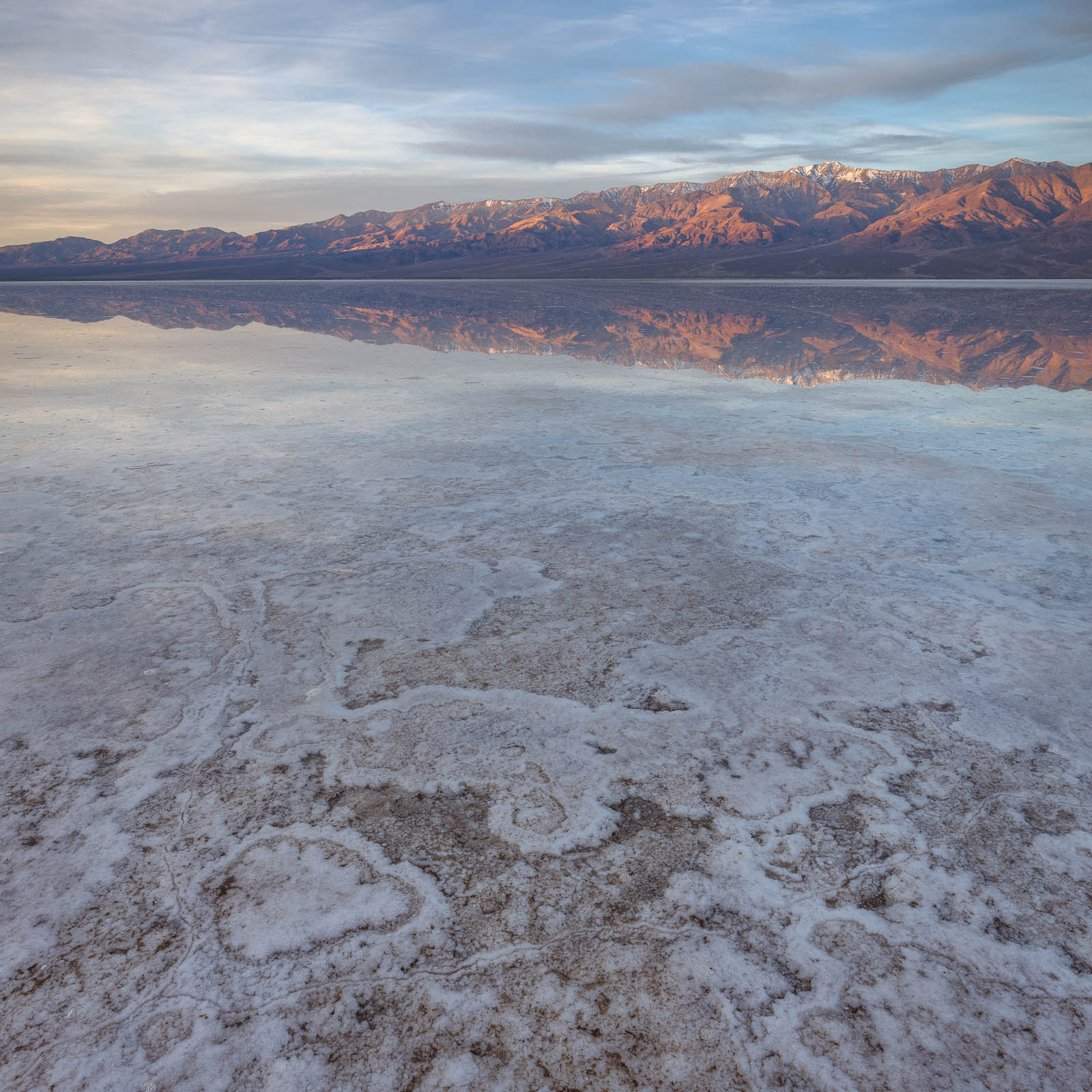
We've spent so much time exploring this part of Death Valley, so seeing Lake Manly re-formed after the heavy rains was something special. This was in December, and the water was incredibly still and shallow. I was drawn to the intricate patterns of salt and mud just below the surface; they seemed to map out the desert floor. The conditions that day were just right. The water was like glass, creating a perfect mirror of the Panamint Mountains. There was some nice, dappled light hitting the peaks, which added a lot of depth to the whole scene, contrasting the distant mountains with the textures right at my feet.
We've spent so much time exploring this part of Death Valley, so seeing Lake Manly re-formed after the heavy rains was something special. This was in December, and the water was incredibly still and shallow. I was drawn to the intricate patterns of salt and mud just below the surface; they seemed to map out the desert floor. The conditions that day were just right. The water was like glass, creating a perfect mirror of the Panamint Mountains. There was some nice, dappled light hitting the peaks, which added a lot of depth to the whole scene, contrasting the distant mountains with the textures right at my feet.
Valley Glow
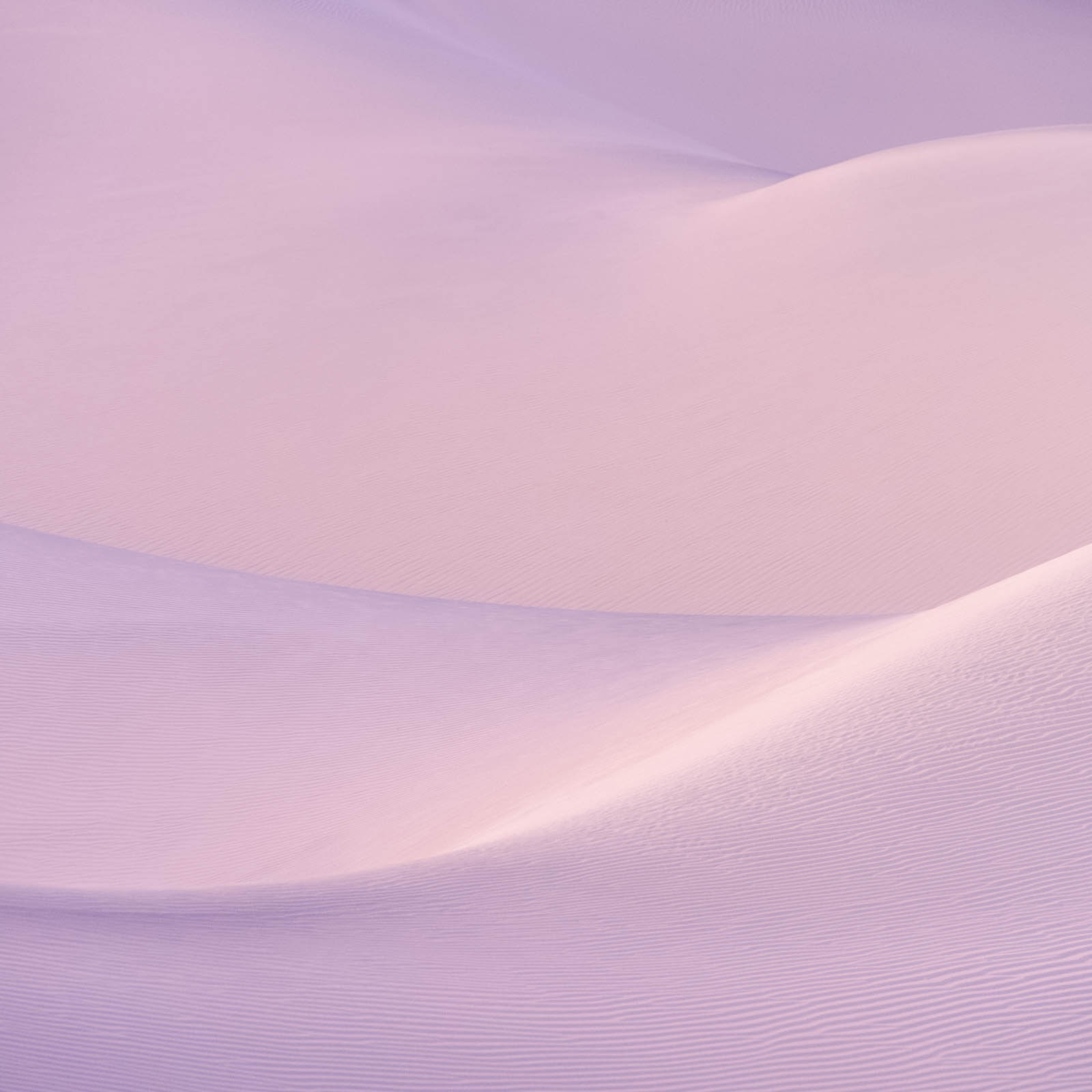
The light during twilight in Death Valley is something special. As the sun dropped below the mountains, the harsh desert landscape transformed completely. I was drawn to the incredible simplicity of these lines in the Mesquite dunes.
The light during twilight in Death Valley is something special. As the sun dropped below the mountains, the harsh desert landscape transformed completely. I was drawn to the incredible simplicity of these lines in the Mesquite dunes.
The Unrelenting Sea
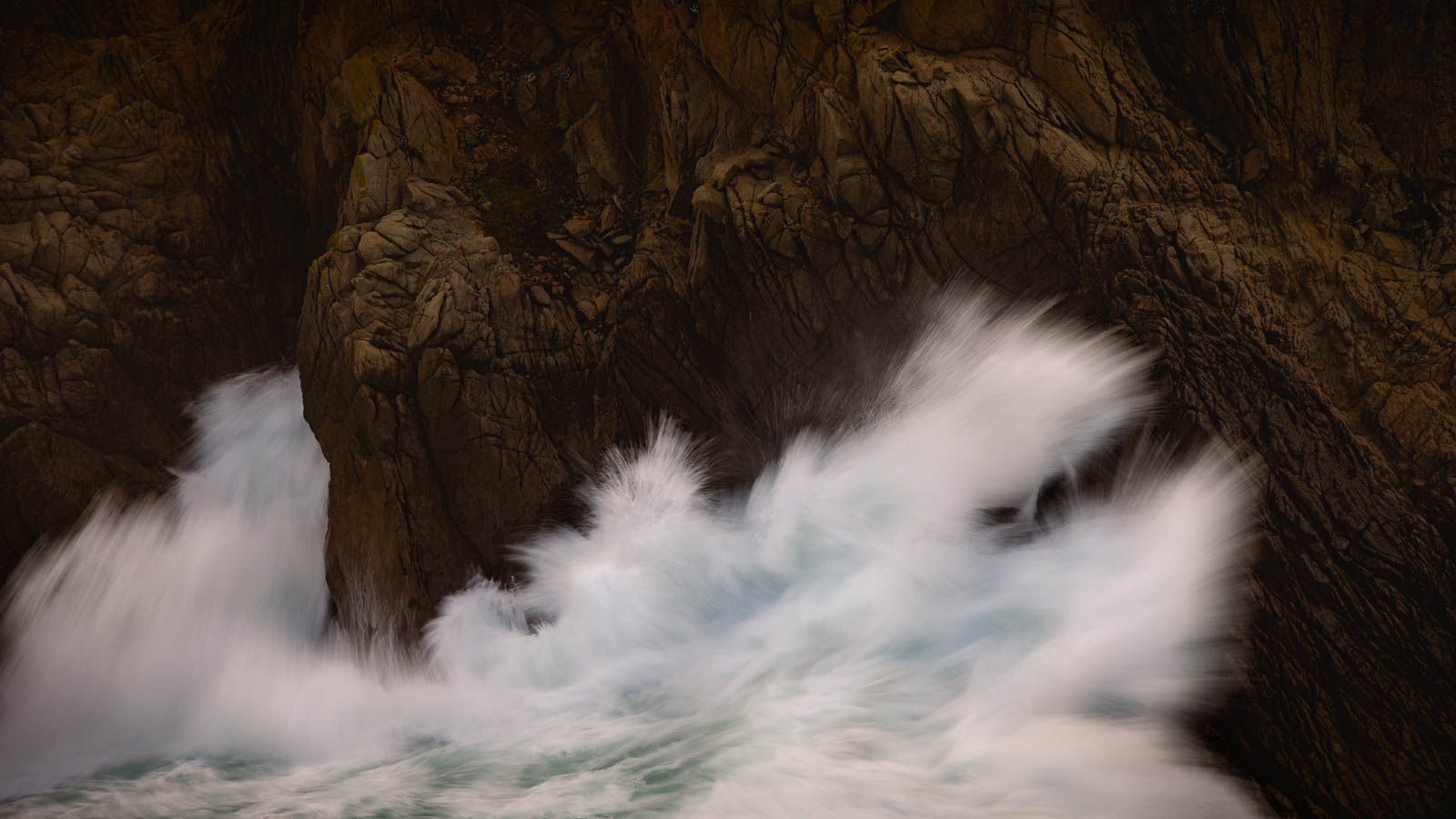
Standing at Point Lobos, I was mesmerized by the sheer force of the ocean. The waves were relentlessly crashing against these rocks, and I wanted to find a way to convey that raw power. A fast shutter speed is typically used for this purpose, but that didn't feel right; it wouldn't show the energy. Instead, I used a slightly slower shutter to let the water's movement paint itself across the frame, turning the spray into this explosive, white blur against the dark, unyielding stone. It’s a good reminder that sometimes the 'rules' of photography don't matter as much as finding the right technique to express the feeling of a place. For me, this was it, the constant, powerful dialogue between water and rock.
Standing at Point Lobos, I was mesmerized by the sheer force of the ocean. The waves were relentlessly crashing against these rocks, and I wanted to find a way to convey that raw power. A fast shutter speed is typically used for this purpose, but that didn't feel right; it wouldn't show the energy. Instead, I used a slightly slower shutter to let the water's movement paint itself across the frame, turning the spray into this explosive, white blur against the dark, unyielding stone. It’s a good reminder that sometimes the 'rules' of photography don't matter as much as finding the right technique to express the feeling of a place. For me, this was it, the constant, powerful dialogue between water and rock.
Ephemeral Coastline
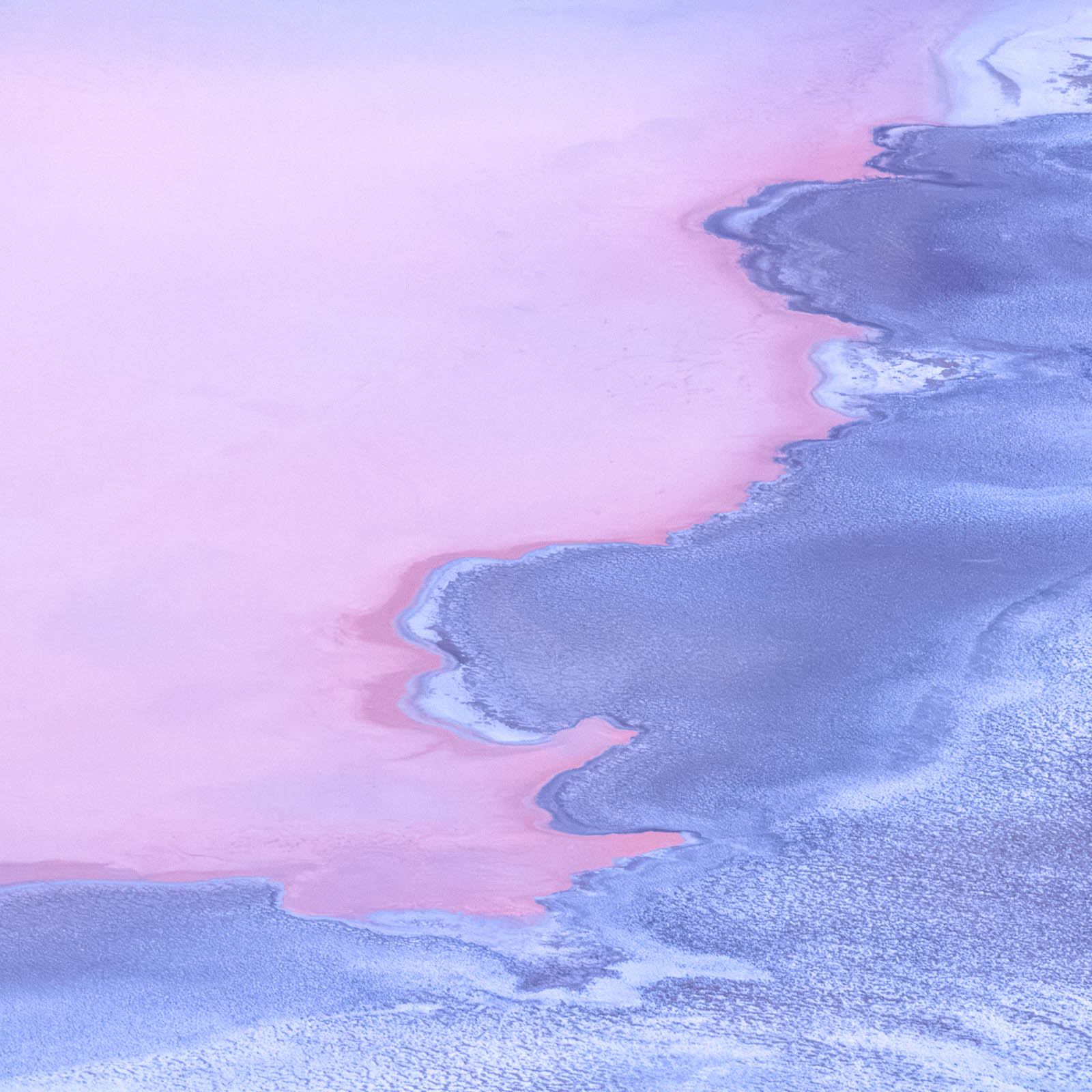
I was up at Dante's View, looking down at the temporary Lake Manly, when the sunset began to reflect on the water. For just a few minutes, the entire surface turned this incredible shade of pink. While the temptation is always to go for the big, wide view in a place like Death Valley, I found myself drawn to the smaller interactions along the shoreline. The way the pink water met the textured, bluish salt flats created these beautiful, abstract shapes. It was a good reminder that even in the most immense landscapes, sometimes the most rewarding scenes are the quiet, intimate ones. This brief reflection brought out details that would have otherwise been lost in the larger view.
I was up at Dante's View, looking down at the temporary Lake Manly, when the sunset began to reflect on the water. For just a few minutes, the entire surface turned this incredible shade of pink. While the temptation is always to go for the big, wide view in a place like Death Valley, I found myself drawn to the smaller interactions along the shoreline. The way the pink water met the textured, bluish salt flats created these beautiful, abstract shapes. It was a good reminder that even in the most immense landscapes, sometimes the most rewarding scenes are the quiet, intimate ones. This brief reflection brought out details that would have otherwise been lost in the larger view.
Similar Rhythms
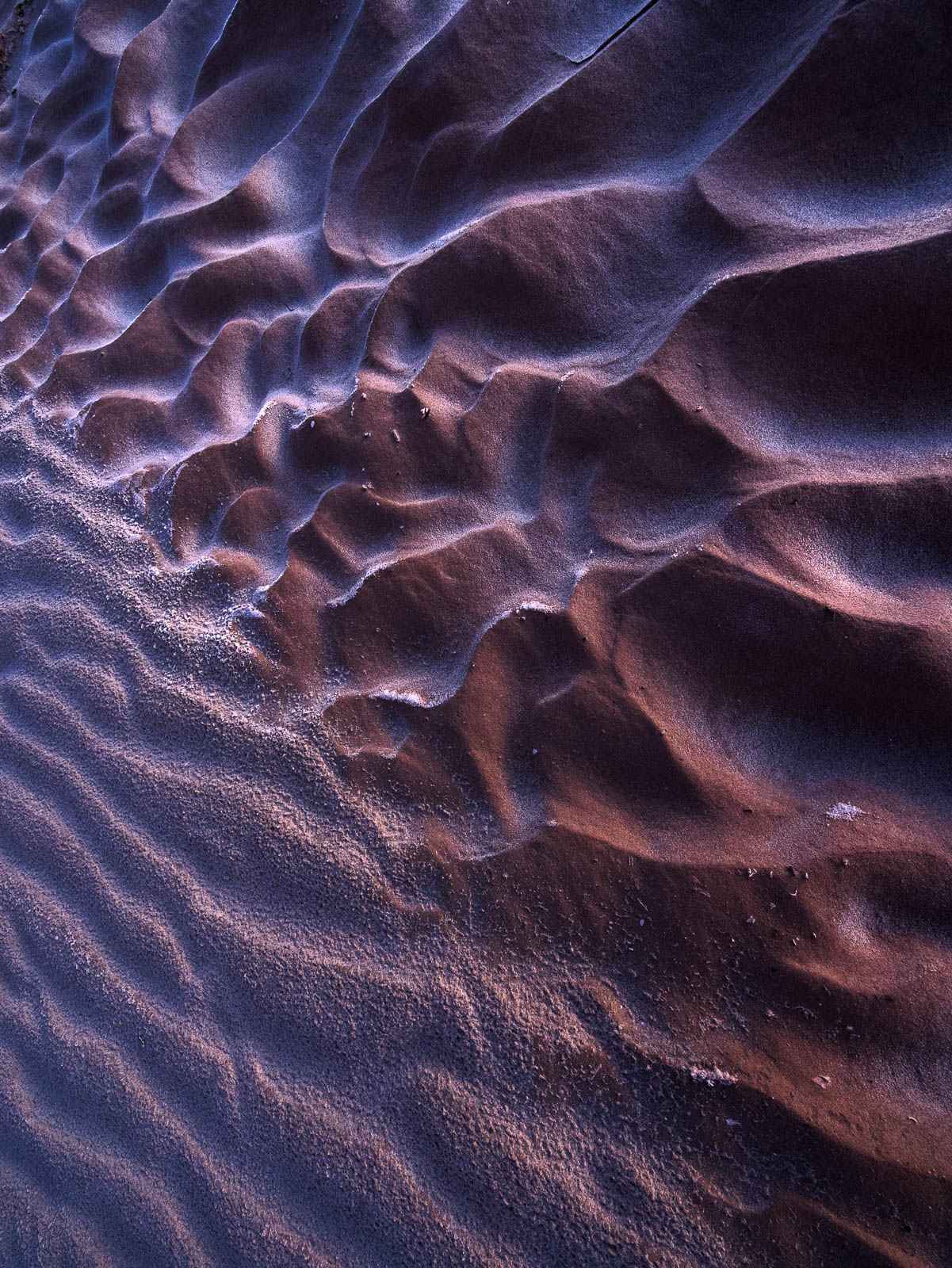
I'm always looking for those quiet interactions in nature, the places where different elements come together. This spot in Death Valley was a perfect example. Here, fine sand met fresh mud, and I was struck by the similar patterns created by completely different forces. You could see how the wind had sculpted the sand into soft ripples, and right next to it, how water had once flowed and left its own wavy signature in the drying mud. It’s one of those things that makes you pause and appreciate how nature has these recurring themes, these familiar rhythms, but they never play out in exactly the same way. It's a simple scene, but it holds a lot of that quiet complexity I love to find.
I'm always looking for those quiet interactions in nature, the places where different elements come together. This spot in Death Valley was a perfect example. Here, fine sand met fresh mud, and I was struck by the similar patterns created by completely different forces. You could see how the wind had sculpted the sand into soft ripples, and right next to it, how water had once flowed and left its own wavy signature in the drying mud. It’s one of those things that makes you pause and appreciate how nature has these recurring themes, these familiar rhythms, but they never play out in exactly the same way. It's a simple scene, but it holds a lot of that quiet complexity I love to find.
Relentless Forms
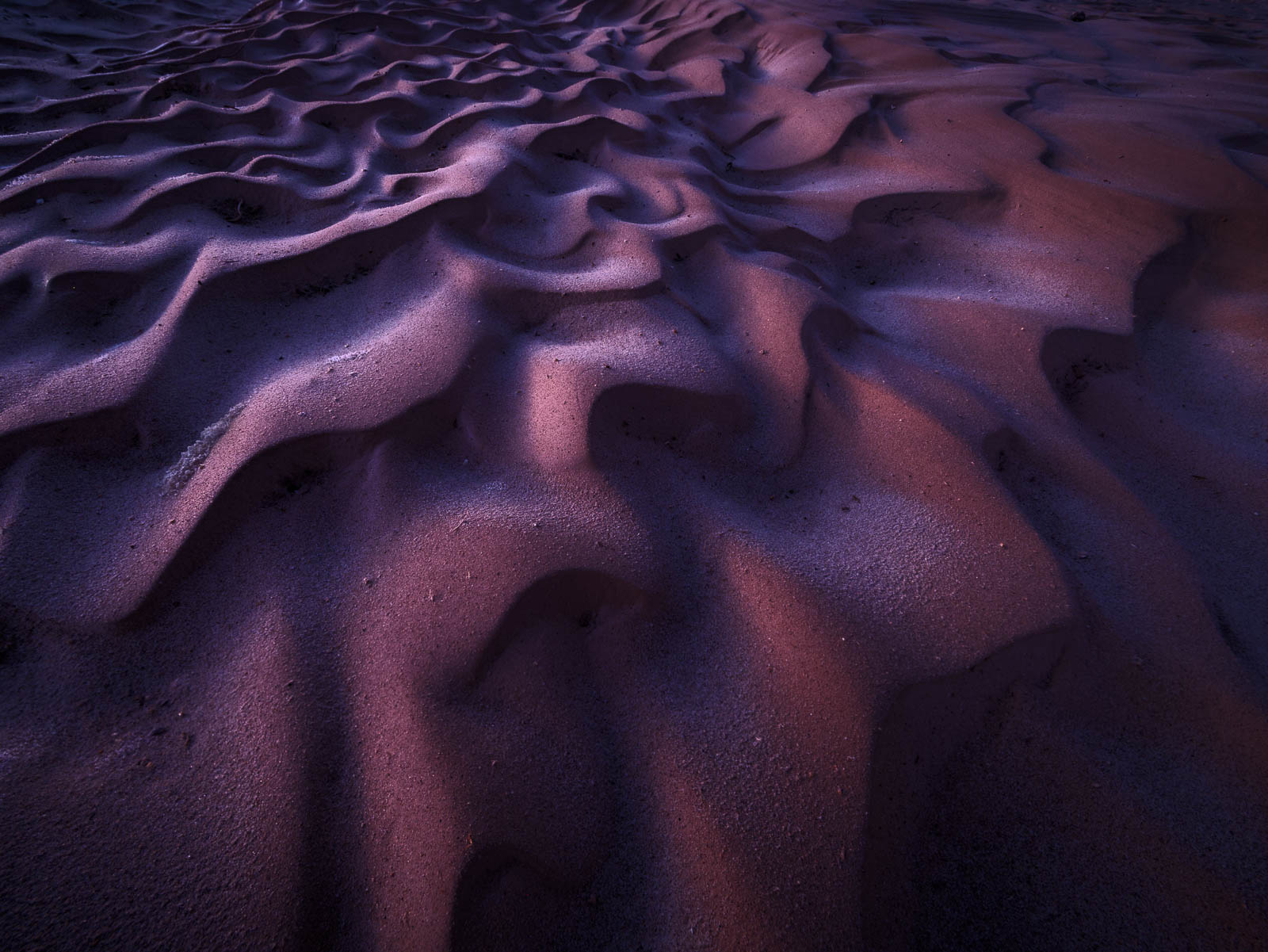
What I find so compelling about Death Valley is how you can see the land's history written right on its surface. When I found these patterns, I could see the story clearly. First, water had flowed through recently, leaving these soft ripples in the mud. Then, the relentless desert wind came and scoured the surface, pelting it with sand and covering it with debris. It’s a constant cycle of creation and destruction out there. I wanted to emphasize that raw, powerful feeling, so I kept the processing on the darker side. It felt more true to the ominous and powerful nature of the elements that are constantly reshaping this incredible landscape.
What I find so compelling about Death Valley is how you can see the land's history written right on its surface. When I found these patterns, I could see the story clearly. First, water had flowed through recently, leaving these soft ripples in the mud. Then, the relentless desert wind came and scoured the surface, pelting it with sand and covering it with debris. It’s a constant cycle of creation and destruction out there. I wanted to emphasize that raw, powerful feeling, so I kept the processing on the darker side. It felt more true to the ominous and powerful nature of the elements that are constantly reshaping this incredible landscape.
Canyon Spotlight
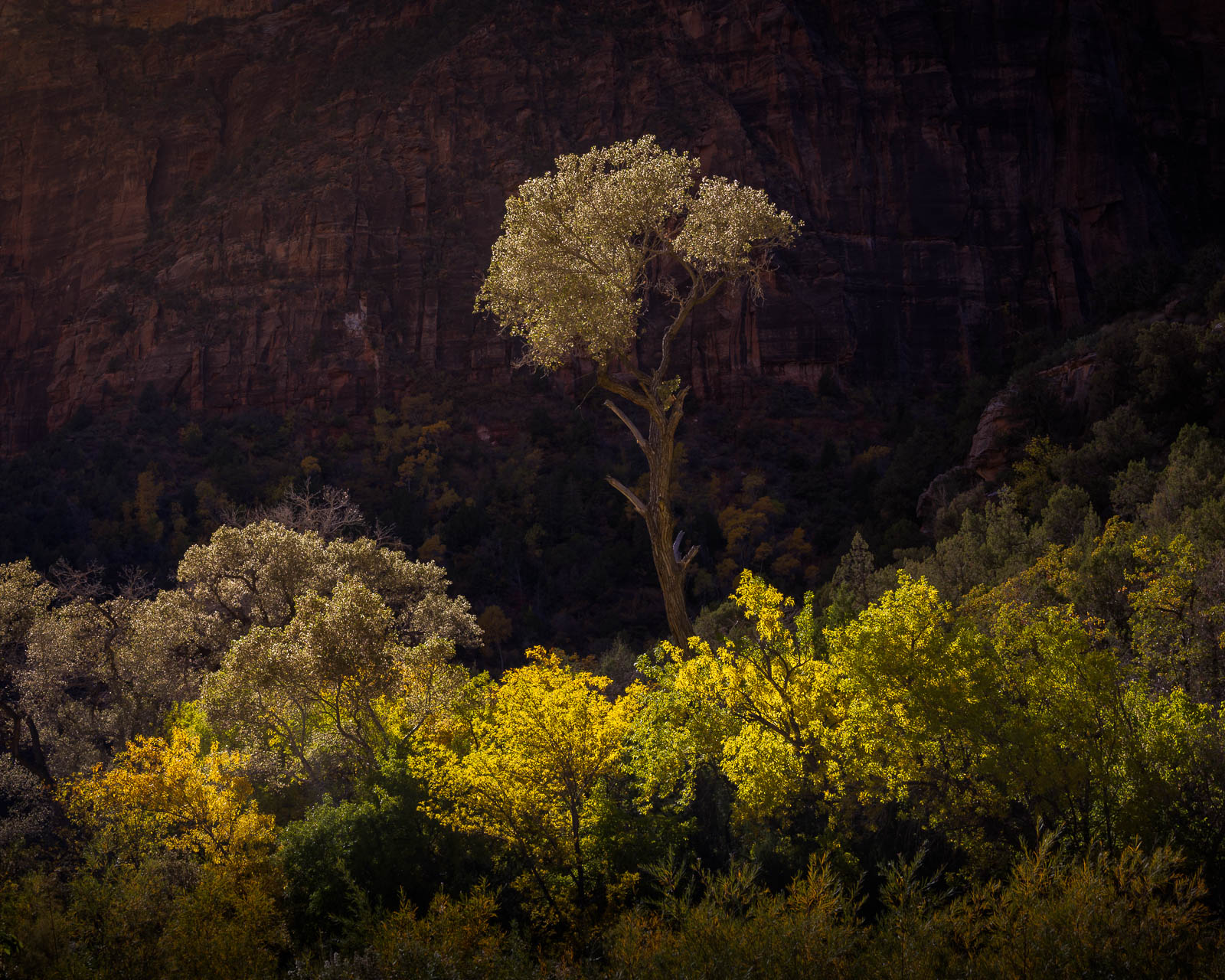
It’s funny how the best moments often happen when you aren't actively searching for a photograph. We were just out for a hike in Zion Canyon, enjoying the afternoon, when this scene unfolded. The sun was getting low, and for just a few minutes, a beam of light found a gap in the canyon walls. It lit up this one tall tree, making it stand out against the deep shadow of the rock face behind it. The smaller, bright yellow trees in the foreground seemed to create a natural frame, guiding the eye right to it. It was a simple, quiet moment, a reminder to always be open to what the landscape might offer when you least expect it.
It’s funny how the best moments often happen when you aren't actively searching for a photograph. We were just out for a hike in Zion Canyon, enjoying the afternoon, when this scene unfolded. The sun was getting low, and for just a few minutes, a beam of light found a gap in the canyon walls. It lit up this one tall tree, making it stand out against the deep shadow of the rock face behind it. The smaller, bright yellow trees in the foreground seemed to create a natural frame, guiding the eye right to it. It was a simple, quiet moment, a reminder to always be open to what the landscape might offer when you least expect it.
Desert Scrolls
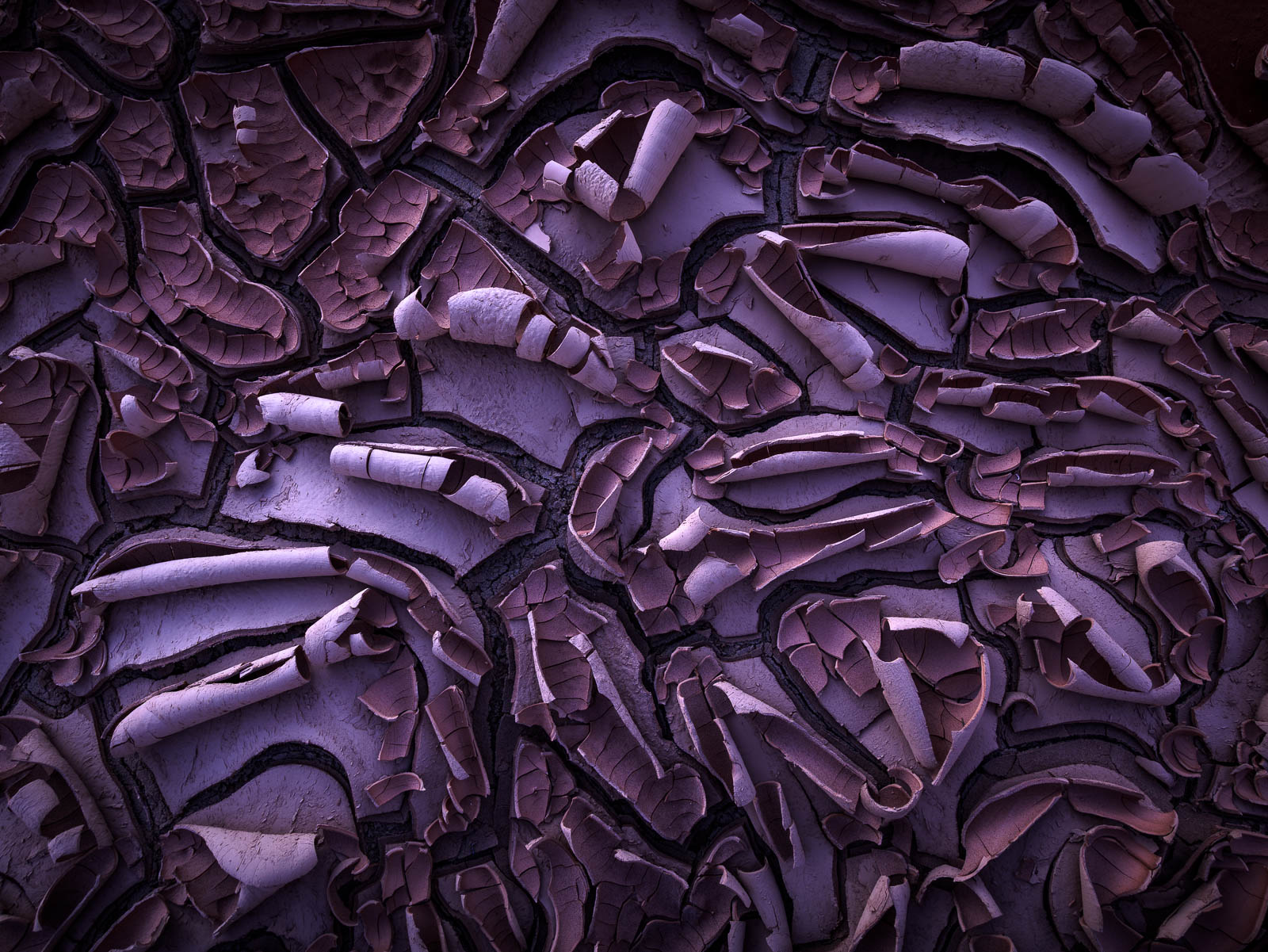
Death Valley's mud is always a source of fascination for me. After the big storms late last year, I knew there would be some interesting things to find. I came across this incredible wash this past December where a layer of mud had been deposited. As it dried out, it began to peel back on itself in these unbelievable ways. It was like looking at delicate scrolls or shavings of wood, each piece curled into a unique shape. The light gave the clay this deep purple color, which felt completely surreal. It’s a temporary art piece, created by the cycle of flood and drought, and I felt lucky to be there to see it before it all crumbled back to dust.
Death Valley's mud is always a source of fascination for me. After the big storms late last year, I knew there would be some interesting things to find. I came across this incredible wash this past December where a layer of mud had been deposited. As it dried out, it began to peel back on itself in these unbelievable ways. It was like looking at delicate scrolls or shavings of wood, each piece curled into a unique shape. The light gave the clay this deep purple color, which felt completely surreal. It’s a temporary art piece, created by the cycle of flood and drought, and I felt lucky to be there to see it before it all crumbled back to dust.
Passages of Stone
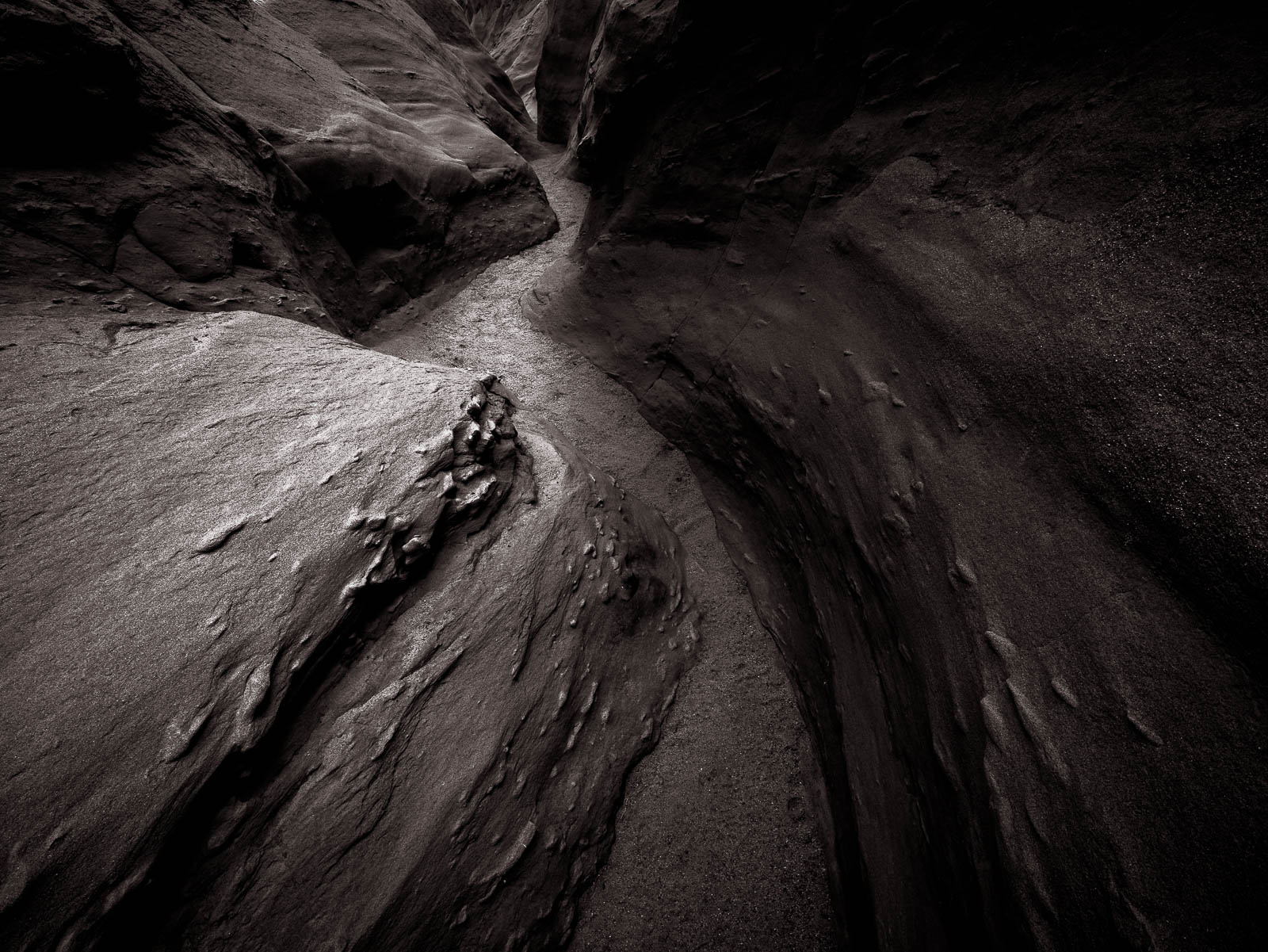
Anza-Borrego is full of surprises if you're willing to look beyond the main trails. I had heard about a few slot canyons tucked away in the badlands, and finding this one took a bit of searching. I was struck by the elegant, flowing lines carved into the rock. The walls were smooth in some places and rough with texture in others, shaped by countless flash floods. It felt incredibly quiet and still inside the canyon, a hidden world sculpted by water and time. I wanted to make a photograph that conveyed that sense of intimacy and discovery, focusing on the simple, powerful shapes of the passage.
Anza-Borrego is full of surprises if you're willing to look beyond the main trails. I had heard about a few slot canyons tucked away in the badlands, and finding this one took a bit of searching. I was struck by the elegant, flowing lines carved into the rock. The walls were smooth in some places and rough with texture in others, shaped by countless flash floods. It felt incredibly quiet and still inside the canyon, a hidden world sculpted by water and time. I wanted to make a photograph that conveyed that sense of intimacy and discovery, focusing on the simple, powerful shapes of the passage.
Nocturne
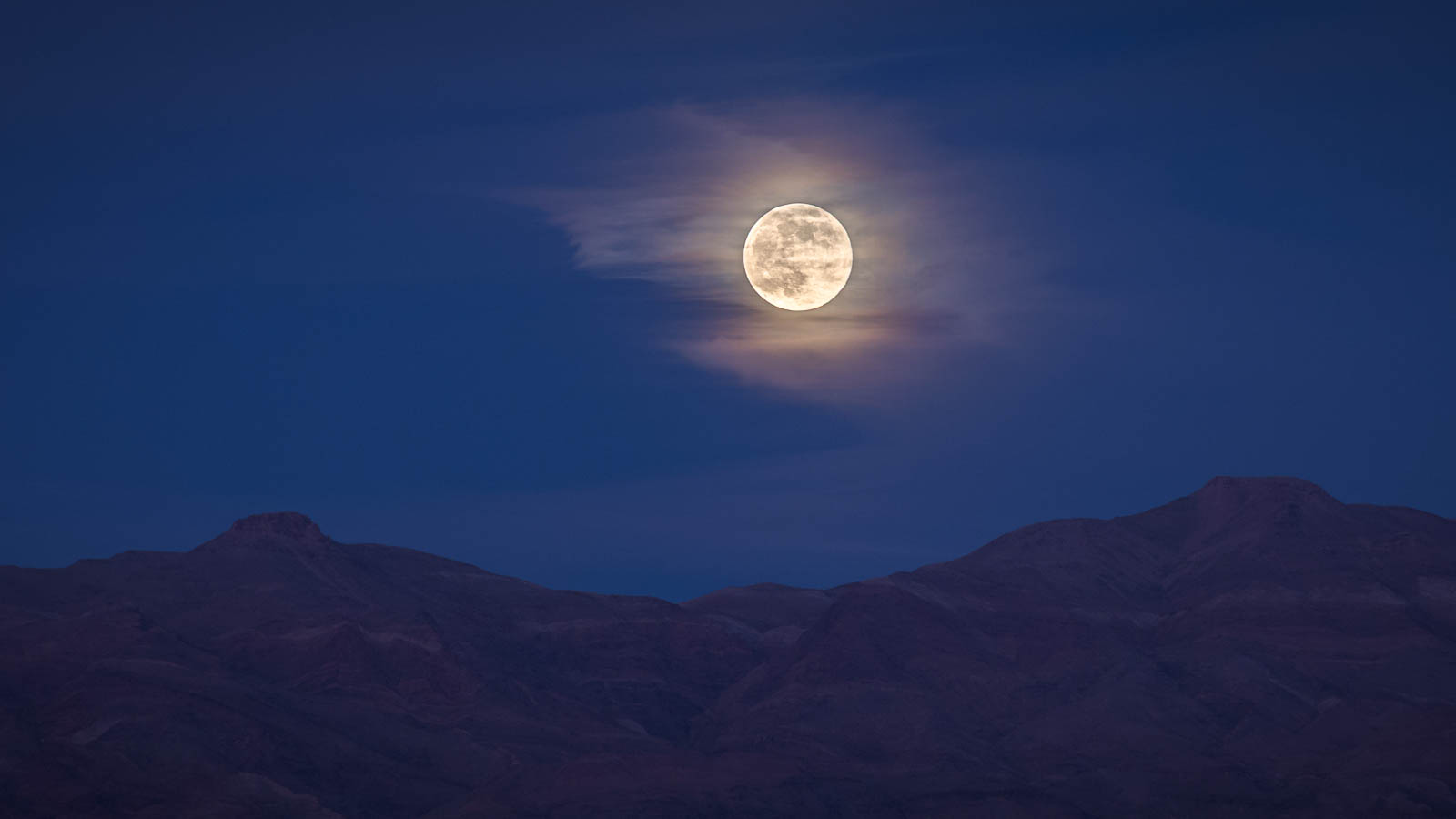
I don't often find myself making images of the moon. It's a subject I've never really connected with, but this night in Death Valley was different. As it rose over what I believe is Chloride Cliff in the Funeral Mountains, it passed through a layer of high, thin clouds. The way the light interacted with them created this subtle iridescence, a soft glow that was really compelling. It wasn't just a bright circle in the sky; it felt like part of the atmosphere, casting a mysterious and quiet mood over the entire desert landscape. It was one of those simple, unexpected moments that made me stop and pay attention.
I don't often find myself making images of the moon. It's a subject I've never really connected with, but this night in Death Valley was different. As it rose over what I believe is Chloride Cliff in the Funeral Mountains, it passed through a layer of high, thin clouds. The way the light interacted with them created this subtle iridescence, a soft glow that was really compelling. It wasn't just a bright circle in the sky; it felt like part of the atmosphere, casting a mysterious and quiet mood over the entire desert landscape. It was one of those simple, unexpected moments that made me stop and pay attention.
Intertidal Garden
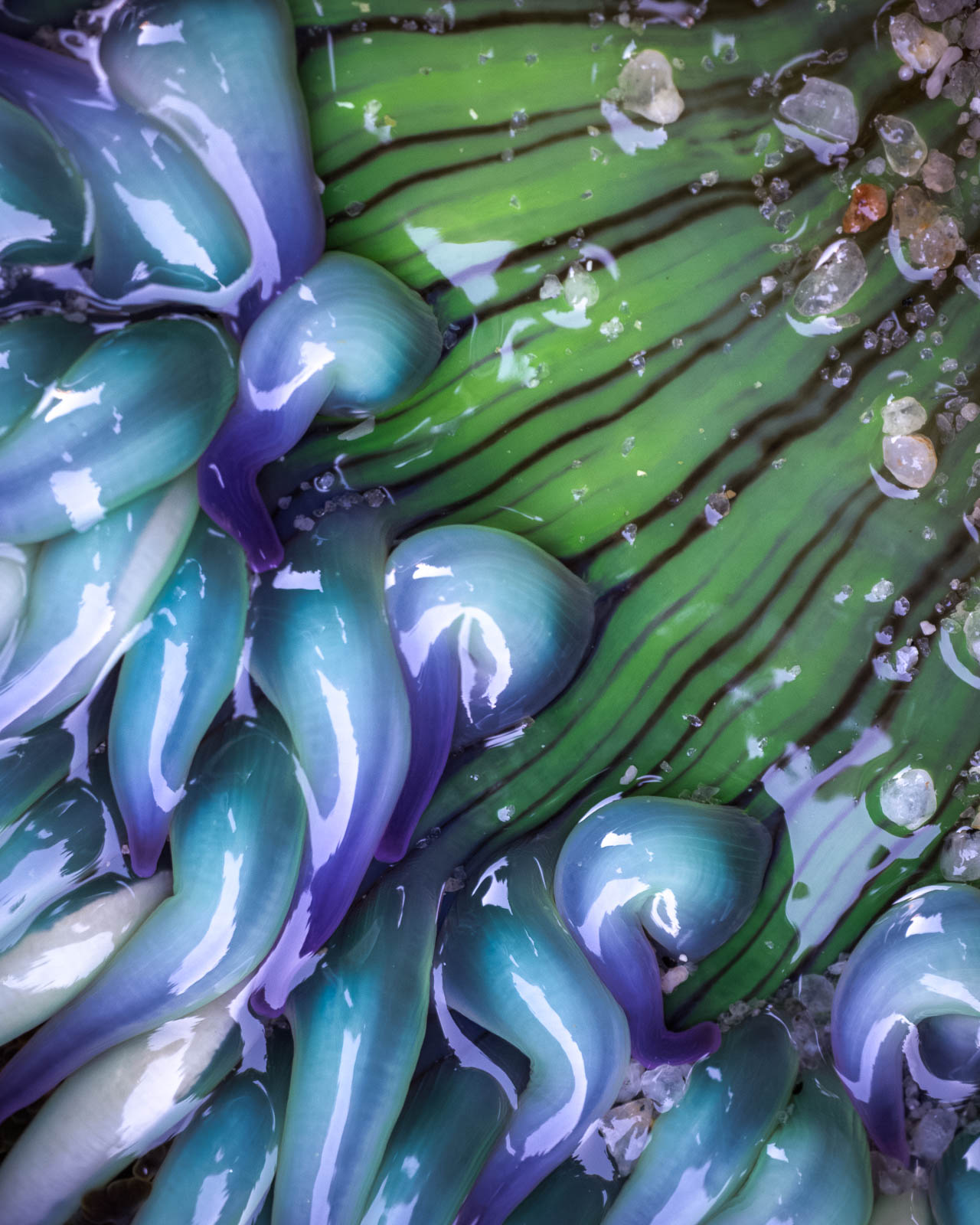
I've always found anemones to be fascinating. When you get down close, you see this whole world of stunning color and texture that's usually hidden by the waves. Finding them is one thing, but making a composition is another challenge entirely. You have to time the tides just right, and even then, every wash of water rearranges the scene. I spent a good while watching the current move over this group, waiting for a moment of clarity. The way the blue and purple tentacles contrasted with the striped green body was just incredible. It’s these small, vibrant details in the intertidal zone that really pull me in.
I've always found anemones to be fascinating. When you get down close, you see this whole world of stunning color and texture that's usually hidden by the waves. Finding them is one thing, but making a composition is another challenge entirely. You have to time the tides just right, and even then, every wash of water rearranges the scene. I spent a good while watching the current move over this group, waiting for a moment of clarity. The way the blue and purple tentacles contrasted with the striped green body was just incredible. It’s these small, vibrant details in the intertidal zone that really pull me in.
Desert Storyline
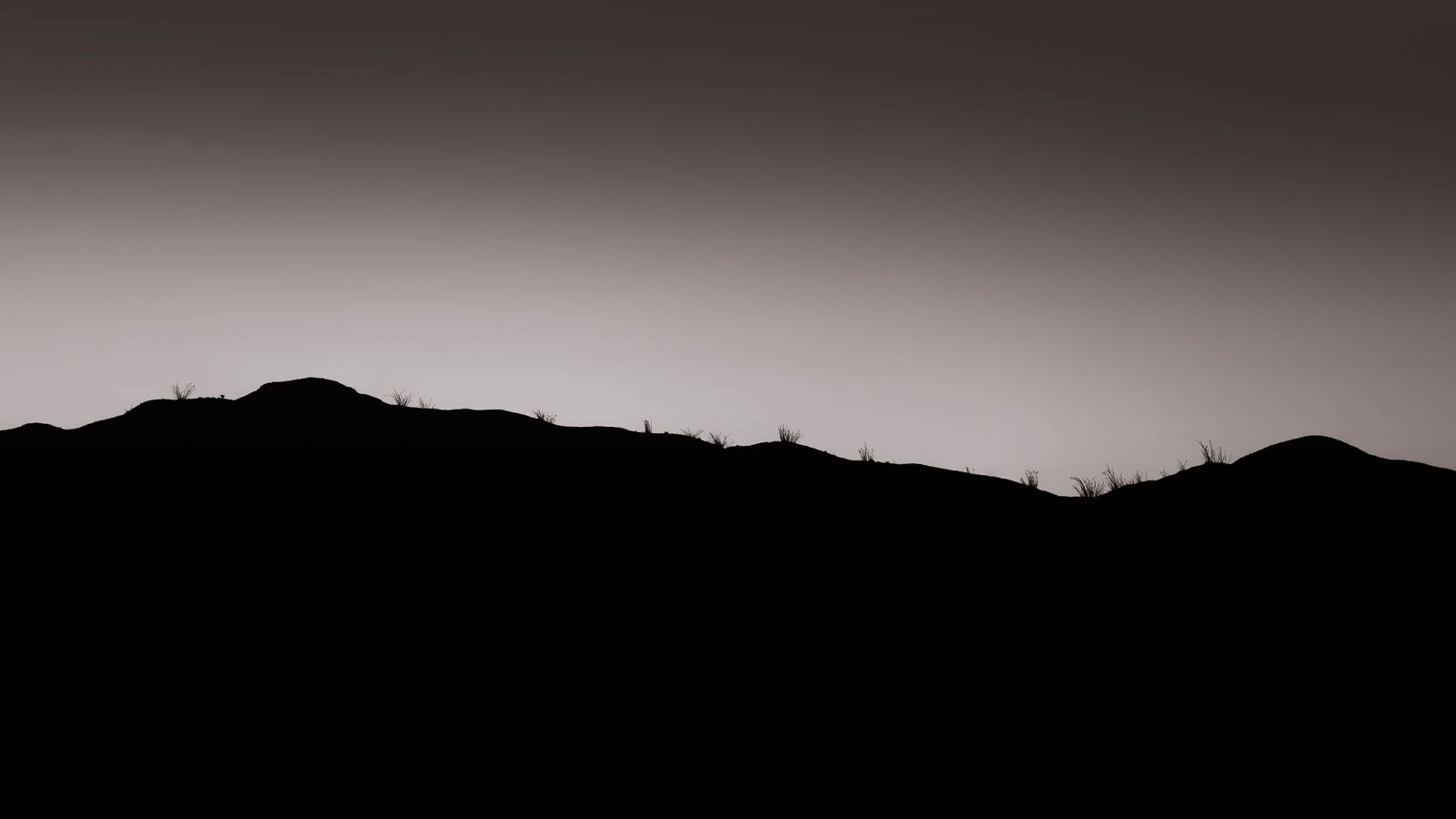
I spend a lot of time in Anza-Borrego, and it’s easy to get caught up in the grand landscapes. But on this morning, what really held my attention was this simple ridgeline. The light was fading, and the hills became pure shape, a dark line against the sky. What made it for me were the ocotillos, each one a small, distinct character standing against the last light. It’s a quiet scene, almost abstract. I find that these pared-down compositions often say the most. There’s a story in that simple line, a feeling of persistence in the desert that you don’t need a big, dramatic sunset to appreciate.
I spend a lot of time in Anza-Borrego, and it’s easy to get caught up in the grand landscapes. But on this morning, what really held my attention was this simple ridgeline. The light was fading, and the hills became pure shape, a dark line against the sky. What made it for me were the ocotillos, each one a small, distinct character standing against the last light. It’s a quiet scene, almost abstract. I find that these pared-down compositions often say the most. There’s a story in that simple line, a feeling of persistence in the desert that you don’t need a big, dramatic sunset to appreciate.
Ephemeral Glass
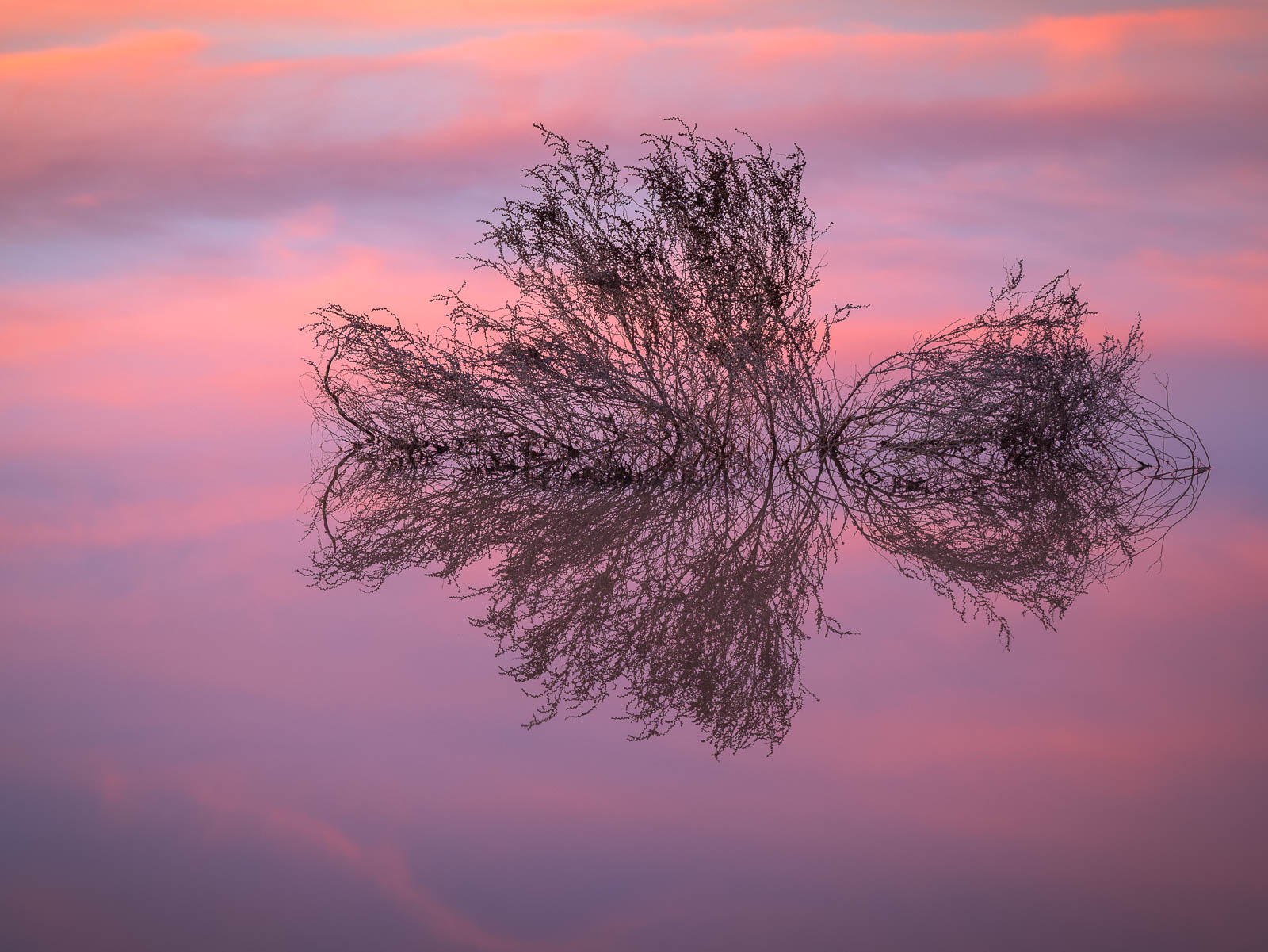
Water in Death Valley is a rare thing, so when I located these ephemeral pools on satelite, I knew I had to go looking. After a few miles of walking, we found them. I visited this spot several times, but this particular evening was special. There was absolutely no wind, and the surface of the water was like glass, a perfect mirror. As the sunset colors began to fill the sky, they also filled the water below. This single bush, looking a bit like it was stranded in a temporary sea, created this incredible, symmetrical reflection. It was such a quiet, fleeting moment, the kind of surprise the desert gives you when you're patient. The stillness and the impossible color made it feel truly unique.
Water in Death Valley is a rare thing, so when I located these ephemeral pools on satelite, I knew I had to go looking. After a few miles of walking, we found them. I visited this spot several times, but this particular evening was special. There was absolutely no wind, and the surface of the water was like glass, a perfect mirror. As the sunset colors began to fill the sky, they also filled the water below. This single bush, looking a bit like it was stranded in a temporary sea, created this incredible, symmetrical reflection. It was such a quiet, fleeting moment, the kind of surprise the desert gives you when you're patient. The stillness and the impossible color made it feel truly unique.
A Flicker of Hope
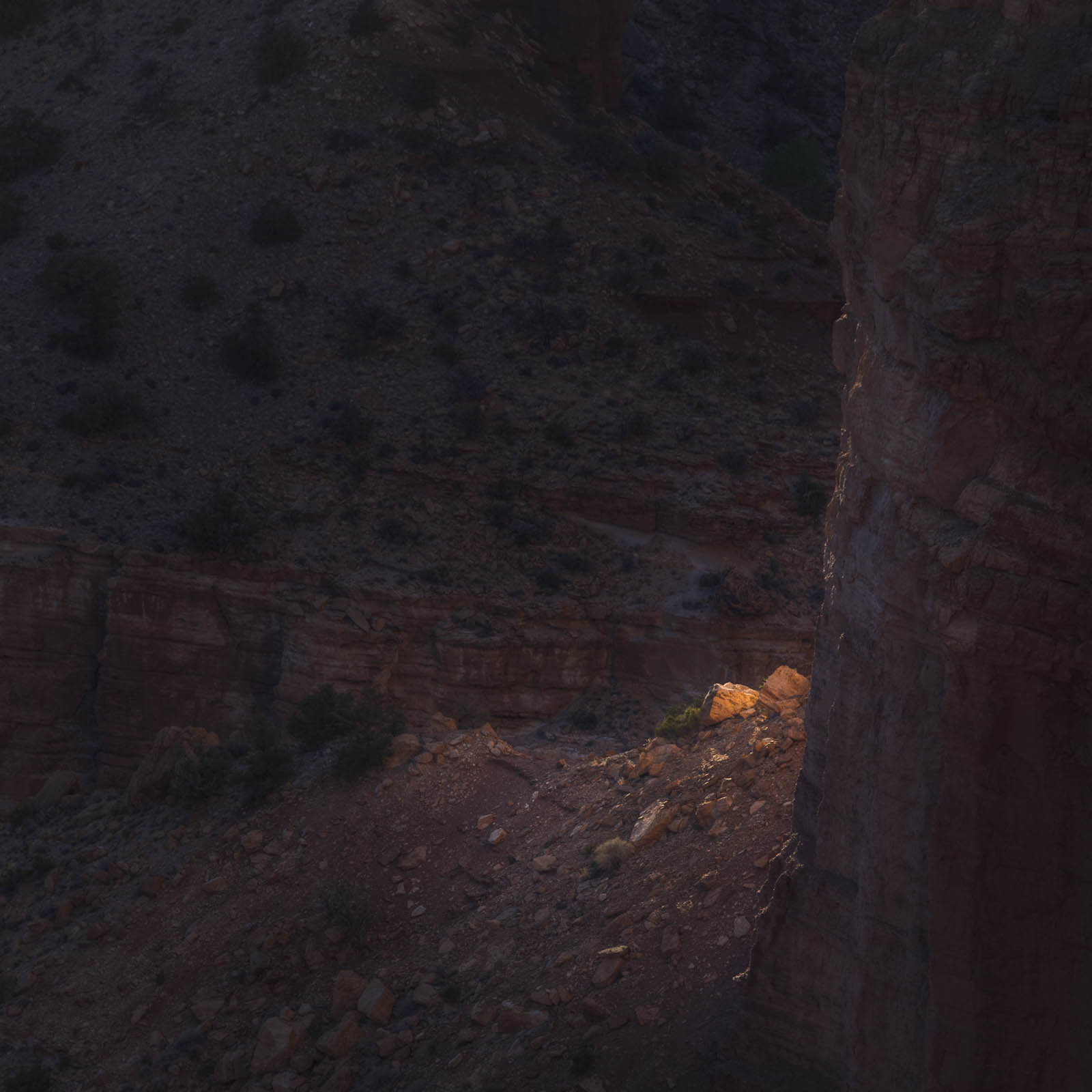
These are the kinds of moments I truly live for out in the landscape. It's not always about the big, epic scenes, but these quiet flickers of light that most people would walk right by. I was exploring this canyon in Utah when I saw this single beam cut through the shadows, illuminating just a small patch of rock and earth. It only lasted for a few moments before it was gone. Last year, I gave a presentation that helped me finally put words to why I'm so drawn to scenes like this. For me, these small, brilliant spots of light in an otherwise dark place represent a sense of hope. It's a deeply personal connection, a reminder of finding light in the darkness.
These are the kinds of moments I truly live for out in the landscape. It's not always about the big, epic scenes, but these quiet flickers of light that most people would walk right by. I was exploring this canyon in Utah when I saw this single beam cut through the shadows, illuminating just a small patch of rock and earth. It only lasted for a few moments before it was gone. Last year, I gave a presentation that helped me finally put words to why I'm so drawn to scenes like this. For me, these small, brilliant spots of light in an otherwise dark place represent a sense of hope. It's a deeply personal connection, a reminder of finding light in the darkness.
The Patient Glow
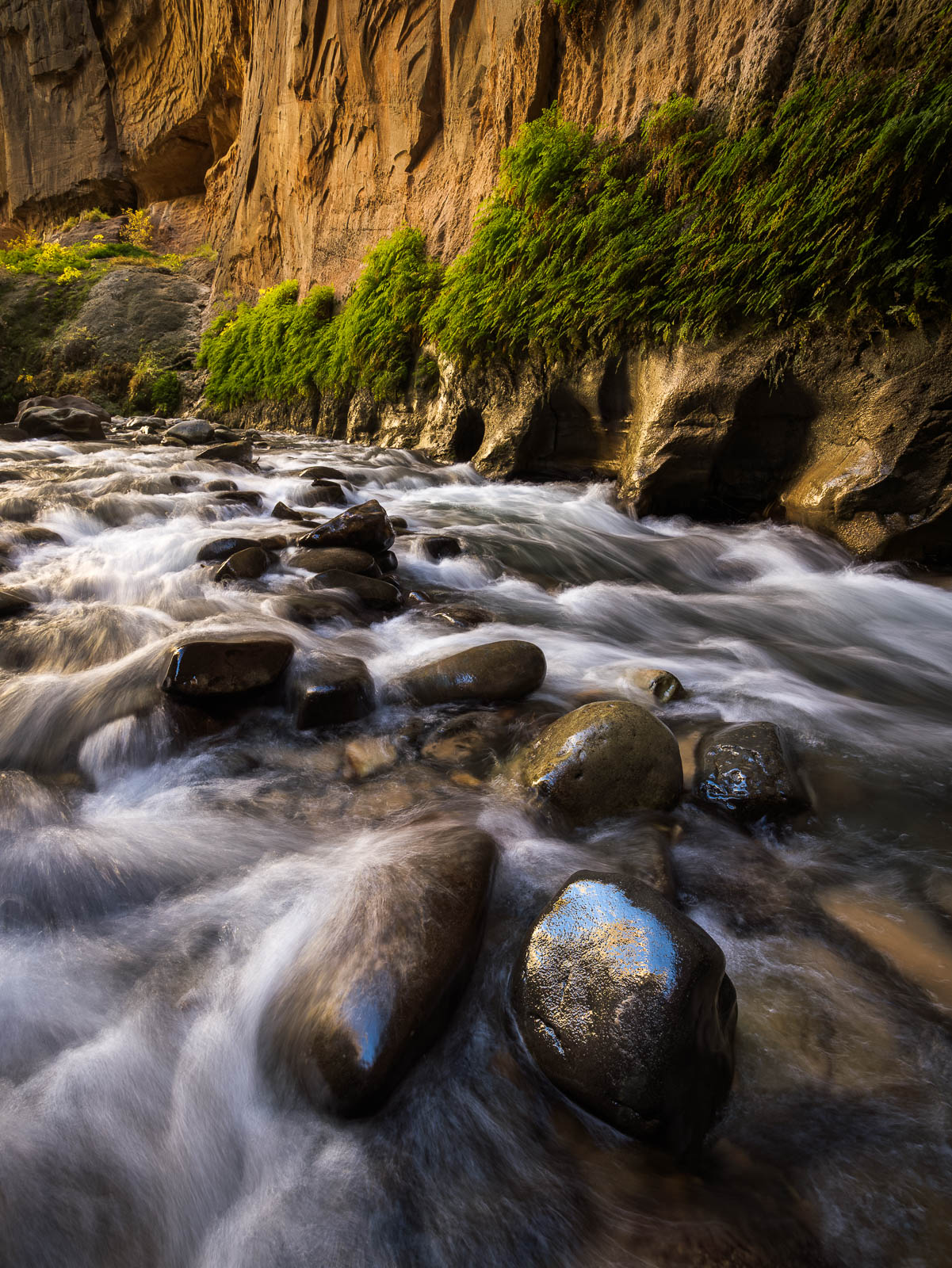
You find some interesting things when you venture deeper into the Zion Narrows, like these walls covered with ferns. I've passed this spot several times, but the wind through this narrow section is relentless and we never quite got the timing right with the elusive glow. This is where perseverance and repeated trips pay off. We finally caught this on an incredibly calm day and got the timing just right to see the light bounce off the opposite wall and illuminate the scene. It was satisfying to finally see the quiet moment I had envisioned, with the soft water flowing past the glowing green ferns.
You find some interesting things when you venture deeper into the Zion Narrows, like these walls covered with ferns. I've passed this spot several times, but the wind through this narrow section is relentless and we never quite got the timing right with the elusive glow. This is where perseverance and repeated trips pay off. We finally caught this on an incredibly calm day and got the timing just right to see the light bounce off the opposite wall and illuminate the scene. It was satisfying to finally see the quiet moment I had envisioned, with the soft water flowing past the glowing green ferns.
Eureka's Fleeting Veil
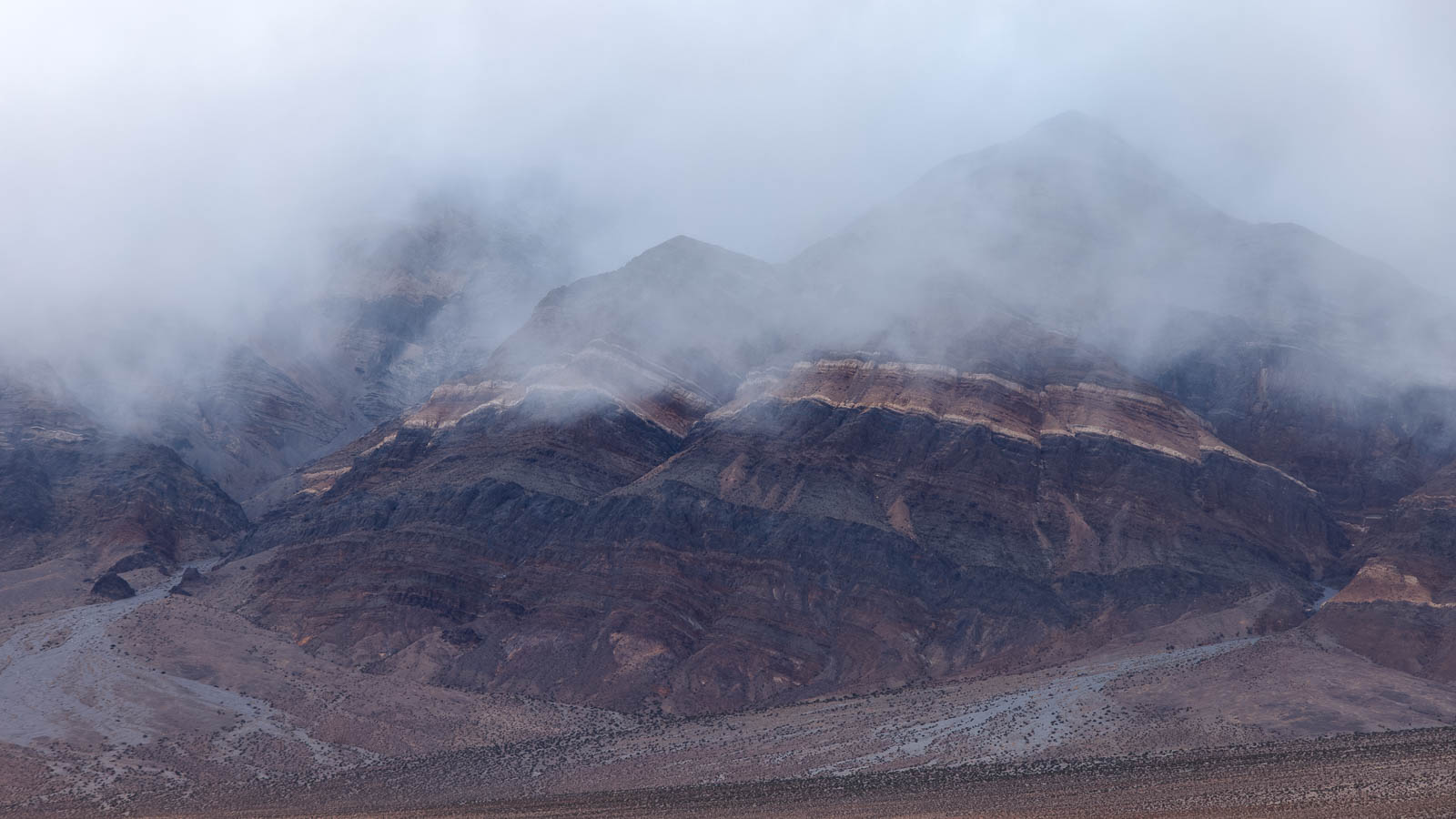
I'll always remember this day in Death Valley. We were out at the Eureka Dunes when we saw this storm system moving in. Instead of running for cover, we watched as the low clouds began to wrap around the mountains in Eureka Valley. The way the mist moved through the peaks, highlighting those incredible colored stripes in the rock, was just stunning. It created this soft, moody atmosphere that you rarely see in the desert. The hike back was another story, the storm finally caught us, and we got completely soaked by sleet and rain. By the time we made it to the car, we were freezing, but it was absolutely worth it for a scene like this.
I'll always remember this day in Death Valley. We were out at the Eureka Dunes when we saw this storm system moving in. Instead of running for cover, we watched as the low clouds began to wrap around the mountains in Eureka Valley. The way the mist moved through the peaks, highlighting those incredible colored stripes in the rock, was just stunning. It created this soft, moody atmosphere that you rarely see in the desert. The hike back was another story, the storm finally caught us, and we got completely soaked by sleet and rain. By the time we made it to the car, we were freezing, but it was absolutely worth it for a scene like this.
Coastal Cosmos
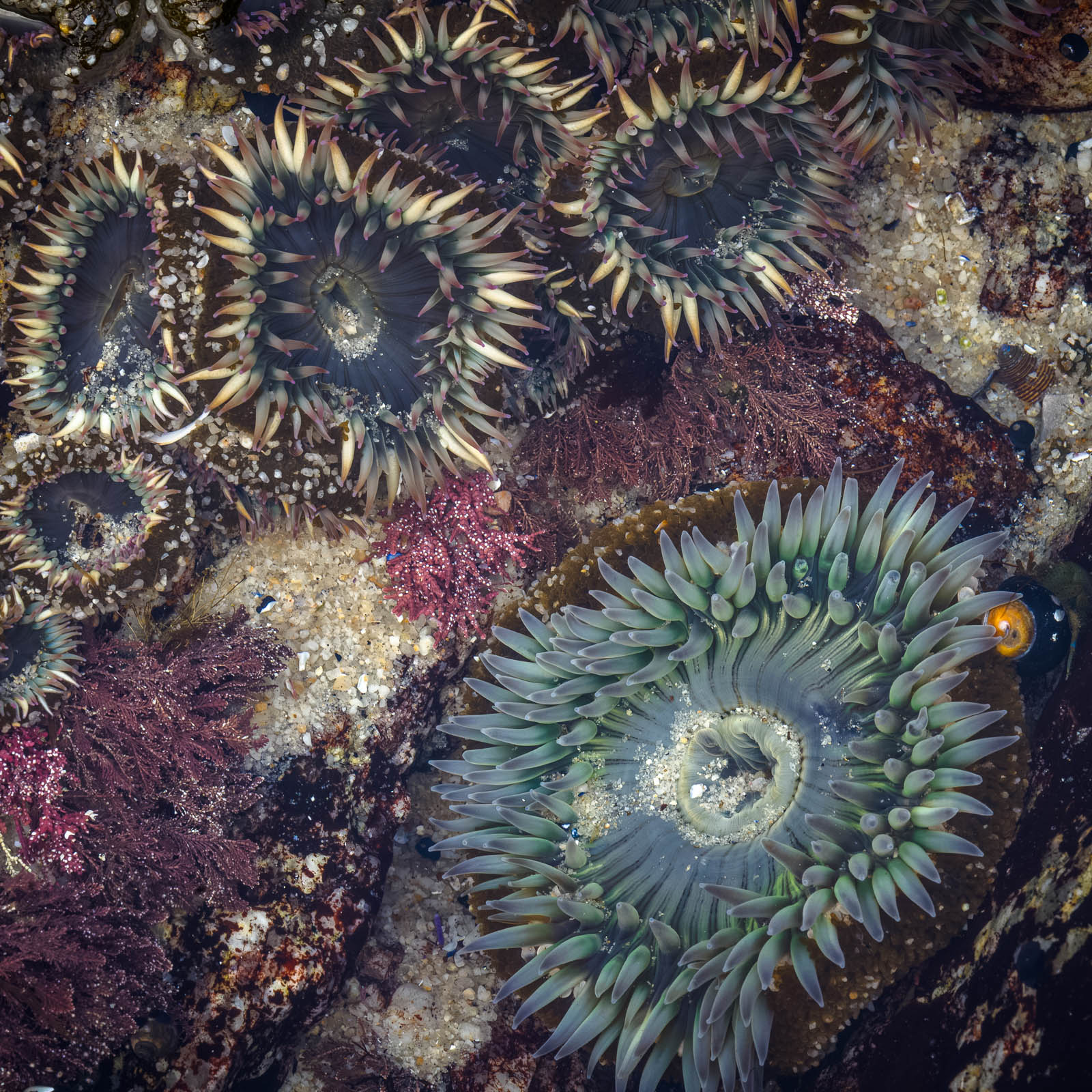
I spend a lot of time looking for grand landscapes, but sometimes the most incredible worlds are right at your feet. I found this little community of anemones in a tide pool near Monterey during low tide. The water was so still and clear that it was like looking through a window into another dimension. Each anemone was its own universe of color and texture, from the pale green tentacles to the deep purples at their tips. It was a quiet, absorbing moment, just me and this tiny, intricate garden hidden away by the ocean.
I've always found a strange connection between looking into the deep ocean and looking up at the night sky. There's so much we don't know about either, and that mystery is captivating. When I came across this tide pool on the Monterey coast, that feeling was immediate. This little world, full of sea anemones and colorful algae, felt like its own galaxy. Each anemone was like a star or a nebula, a complex system unto itself. It’s humbling to think about these intricate lives unfolding in a space most people walk right past. It reminds me that there are entire universes to discover, both out there in the cosmos and right here at our feet, if we just take a moment to look.
Pacific Ghost
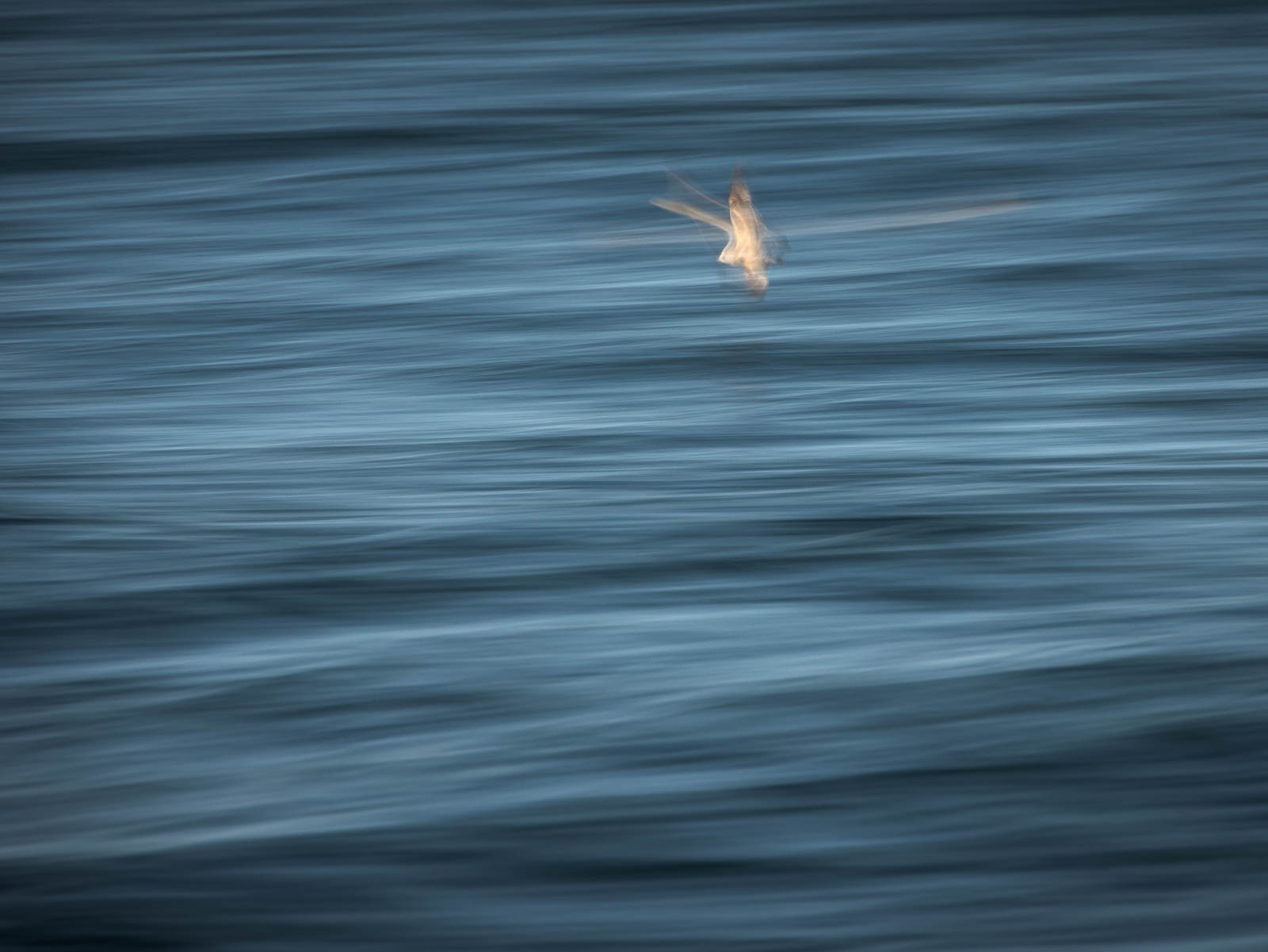
I’ve been experimenting with long exposures of birds as a way to express motion and emotion. For me, they often say far more than a simple portrait ever could. That’s one of the things I love about photography. It can be purely photojournalistic, focused on beauty, expressive, abstract, or anything in between. In the end, it’s up to you as the creator to decide what resonates and how you want to express it.
I’ve been experimenting with long exposures of birds as a way to express motion and emotion. For me, they often say far more than a simple portrait ever could.
That’s one of the things I love about photography. It can be purely photojournalistic, focused on beauty, expressive, abstract, or anything in between. In the end, it’s up to you as the creator to decide what resonates and how you want to express it.
Fractured Earth
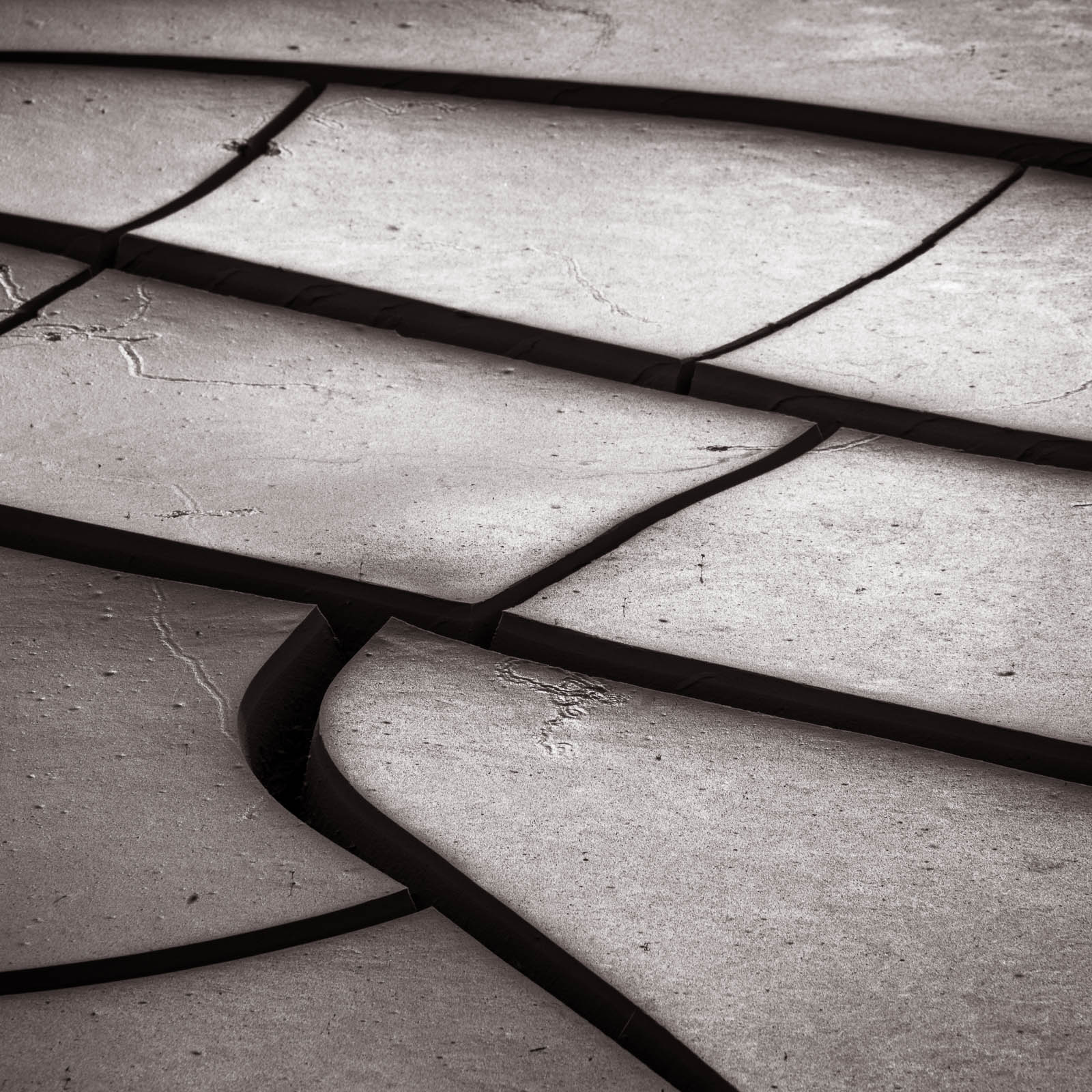
You go to Death Valley expecting these huge, sweeping vistas, and you get them. But sometimes, the most compelling things are right at your feet. These cracks weren't the usual jagged, chaotic patterns. These were smooth, with deep, curved edges that felt almost sculpted. The low sun cut across them, throwing the cracks into pure blackness and making the smooth mud surfaces glow. It felt like looking at a blueprint of the desert, the very bones of the landscape exposed. I spent a long time just composing this small section of the ground, lost in its simple, powerful geometry.
You may notice my images are beginning to look a little less “perfect” than they have in the past. Lately I’ve been embracing the idea of wabi-sabi, that imperfection can make an image more meaningful and alive.
In nature, perfection doesn’t really exist. So rather than spending hours cloning away every small blemish, I’m trying to let the landscape speak for itself. I’ll still remove things that feel truly distracting, but elements like these are part of the story. They reveal the rough edges, the weathering, and the harsh beauty of the desert.
Topographic Contours
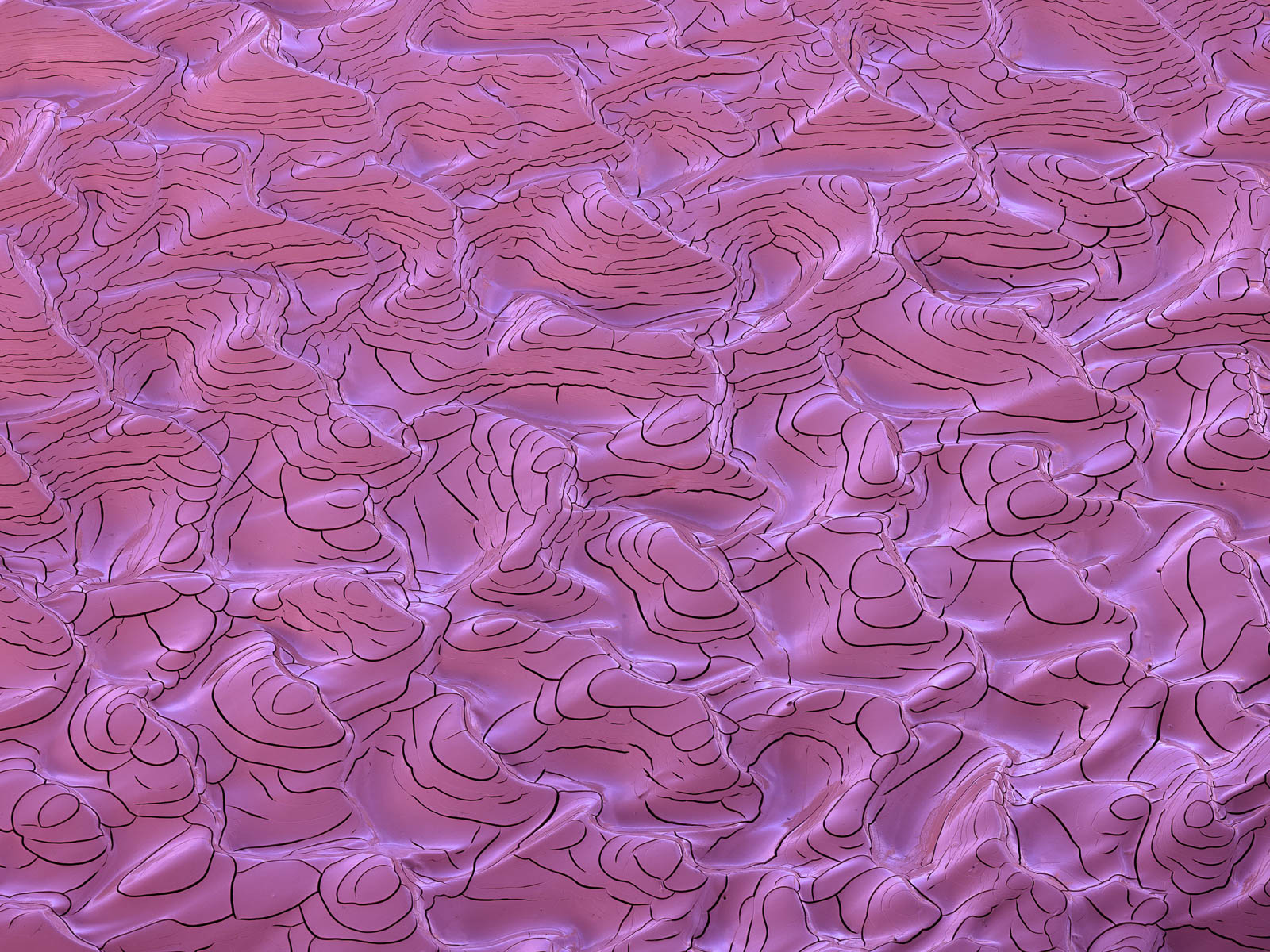
You don't often associate storms with Death Valley, but when they happen, they leave behind the most incredible things. I found this patch of mud as the ground was drying out. It wasn't just cracking; it was sinking, and as it settled, these delicate, topographical lines formed on the surface. I
Sometimes you stumble onto something truly special just by wandering the washes in Death Valley. This winter’s flooding storms gave us hope for interesting mud flows, and after exploring a promising area, we came across these incredibly unique patterns that looked like contour lines on a topographic map.
My theory is that as the mud began to dry, the ground beneath it was still settling. We only found these formations in shallow depressions. As the surface slowly sank, it seems to have pulled the drying mud apart horizontally, creating these unusual cracks.
The Architect of Zion
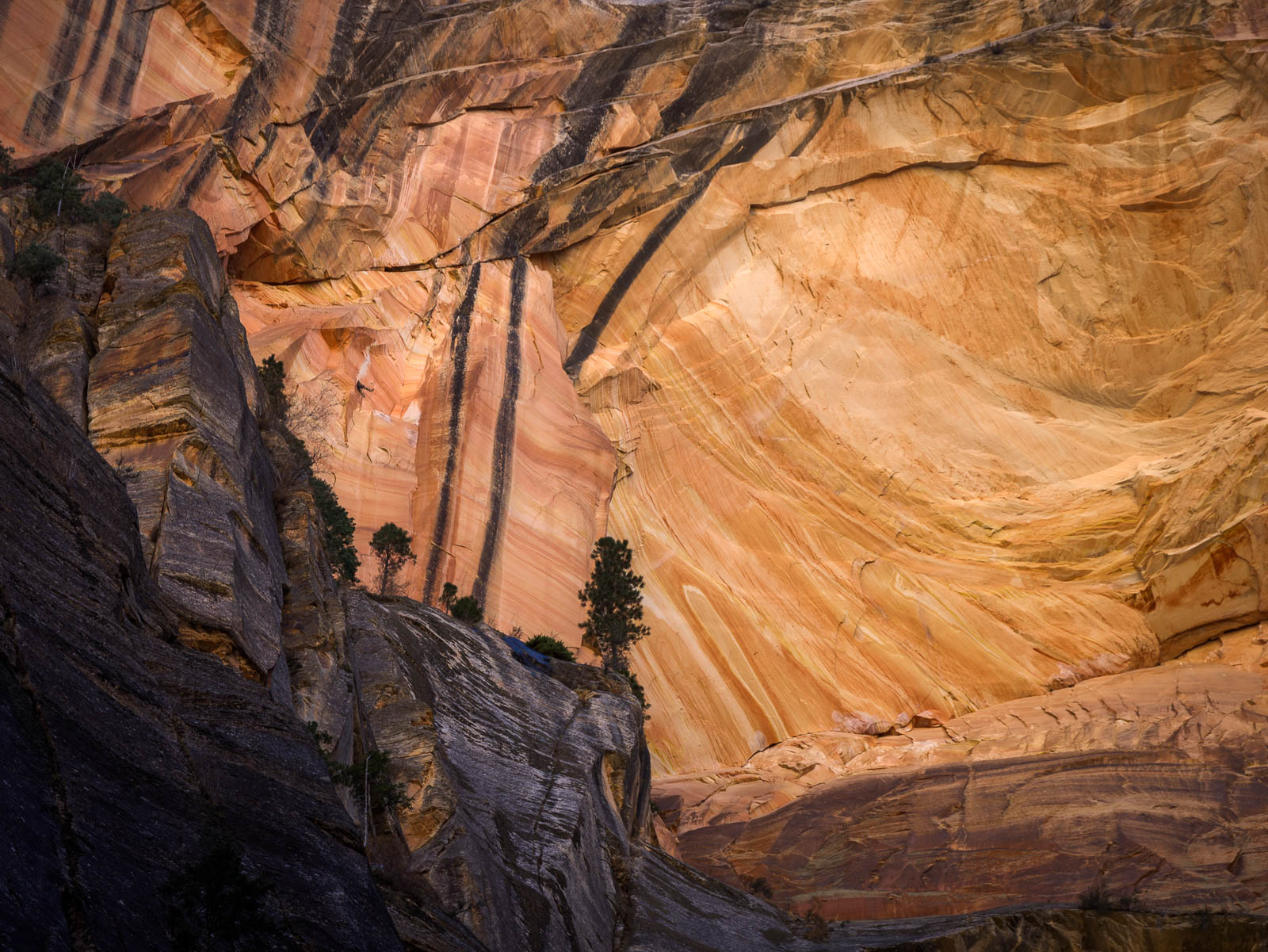
You spend so much time in the Zion Narrows looking down, watching your footing in the river, that you can forget to look up. I stopped for a break, leaning against a cool, damp section of the canyon wall, and this scene just opened up above me. The light was perfect, catching the inside of this huge alcove and making the sandstone glow with an intense, warm orange. It felt like looking into a furnace. Down where I was standing, everything was in deep, cool shadow. The contrast was what got me. Those dark, vertical streaks against the bright rock looked like they were painted on. It was so quiet in that spot, just the immense scale of the rock and that pocket of brilliant light.
It’s easy to get absorbed in what’s at your feet while hiking the Zion Narrows, watching each step through the river and over the stones. But I’ve found it’s just as rewarding to pause and look up.
On one of our final trips of the year, after many miles in that canyon, I noticed this beautiful alcove carved into the sandstone. The textures and layers of desert varnish completely drew me in. It was a reminder that even in a place you’ve visited often, there’s always something waiting above you if you remember to lift your eyes.
Quiet Cadence
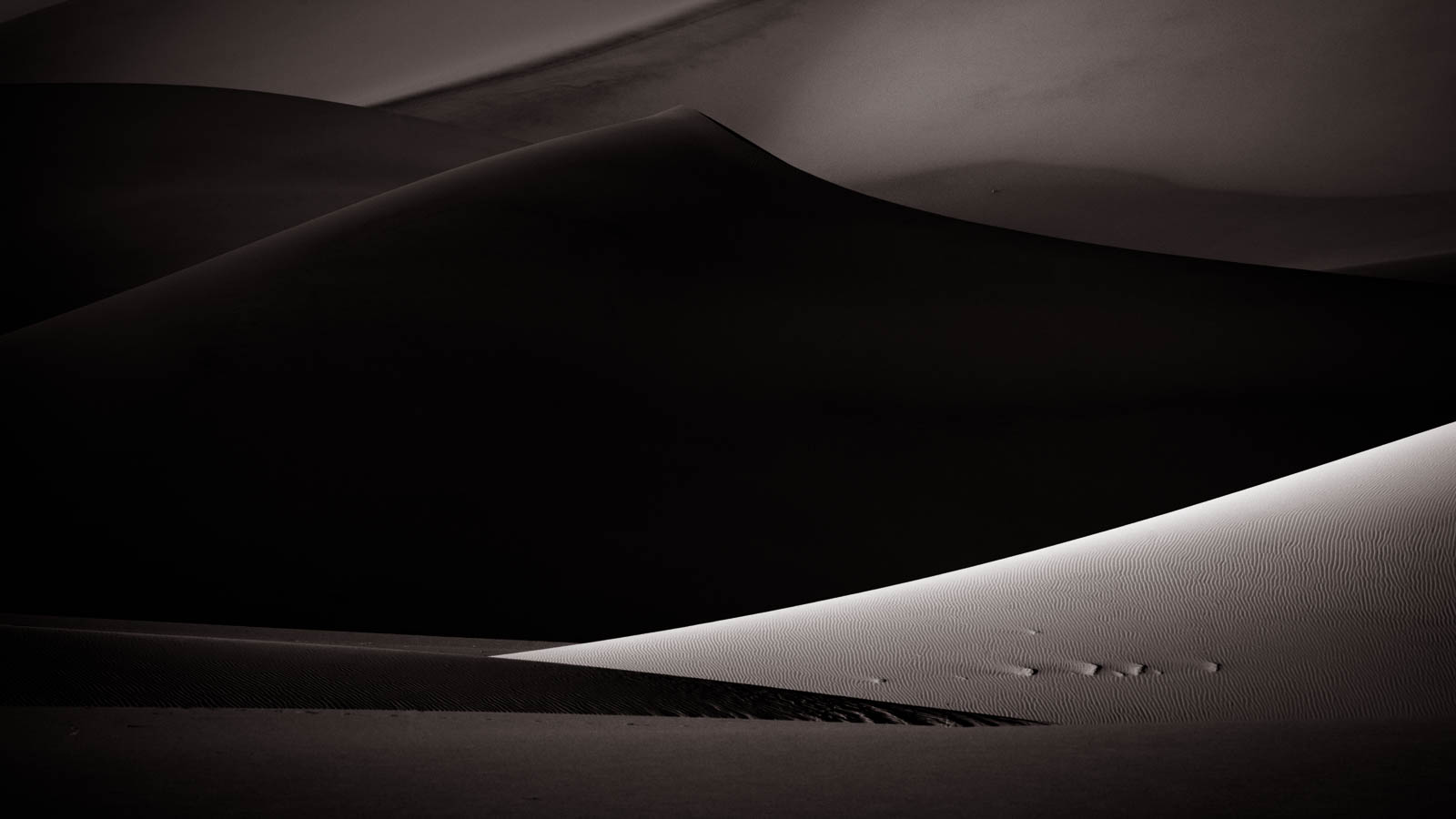
You have to walk a fair bit to get to the Ibex Dunes, and that solitude is part of the experience. The sun was getting low, and the light was doing incredible things, carving deep, dark voids out of the landscape. I stopped focusing on the wider scene and just started looking at these shapes. This one curve caught my eye—how the last bit of light skimmed across its crest, making it glow against the absolute black of the shadow behind it. The air was completely still, and the silence was immense. It felt less like a landscape and more like a sculpture. I just tried to capture that simple, powerful contrast, that line between light and nothingness.
I was drawn to the patterns and shapes in these dunes, the way they flowed across the landscape with a rhythm that felt almost like music. The curves rose and fell like a melody, each ridge echoing the next in quiet repetition.
Music has always been a big part of my life, and I’ve come to realize how often it influences the way I see. Sometimes composition isn’t about rules or balance, it’s about cadence. It’s about pauses and crescendos. It’s about knowing when to let a line carry the eye gently across the frame and when to let it resolve in stillness.
When I’m standing in a place like this, I’m not just looking for shapes. I’m listening for them.
Desert Requiem
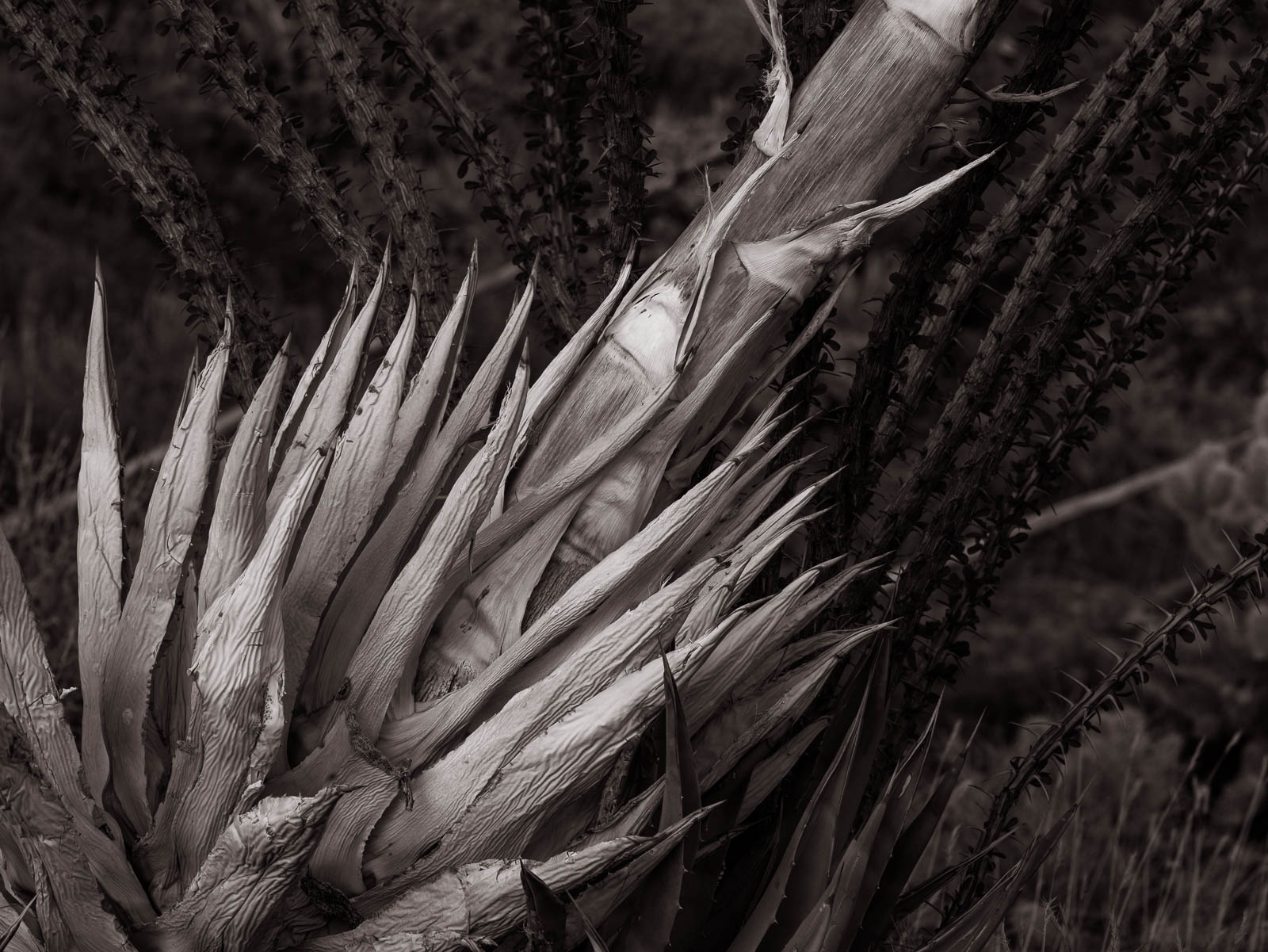
I found this agave in Anza-Borrego, long after its final act. It's a strange and beautiful thing to witness. These plants spend decades storing up energy for one single, massive bloom. They send up a huge stalk, flower, and then that's it—the whole plant dies. It’s a total sacrifice for the next generation. Standing there in the dry desert air, I was struck by the textures left behind. The leaves were like wrinkled parchment, all the life drained out of them but still holding their sharp, architectural shape. I chose black and white to focus on that—the lines, the shadows, and the quiet dignity of its decay against the thorny ocotillo.
The desert holds countless quiet stories. One of the most fascinating is the life cycle of the agave. It can spend decades slowly storing energy, enduring heat, drought, and time itself, all for a single bloom. When the moment comes, it sends up a towering stalk, bursts into flower, and then its life is complete.
A quiet sacrifice, offered to ensure the next generation.
Hayden Valley Calligraphy
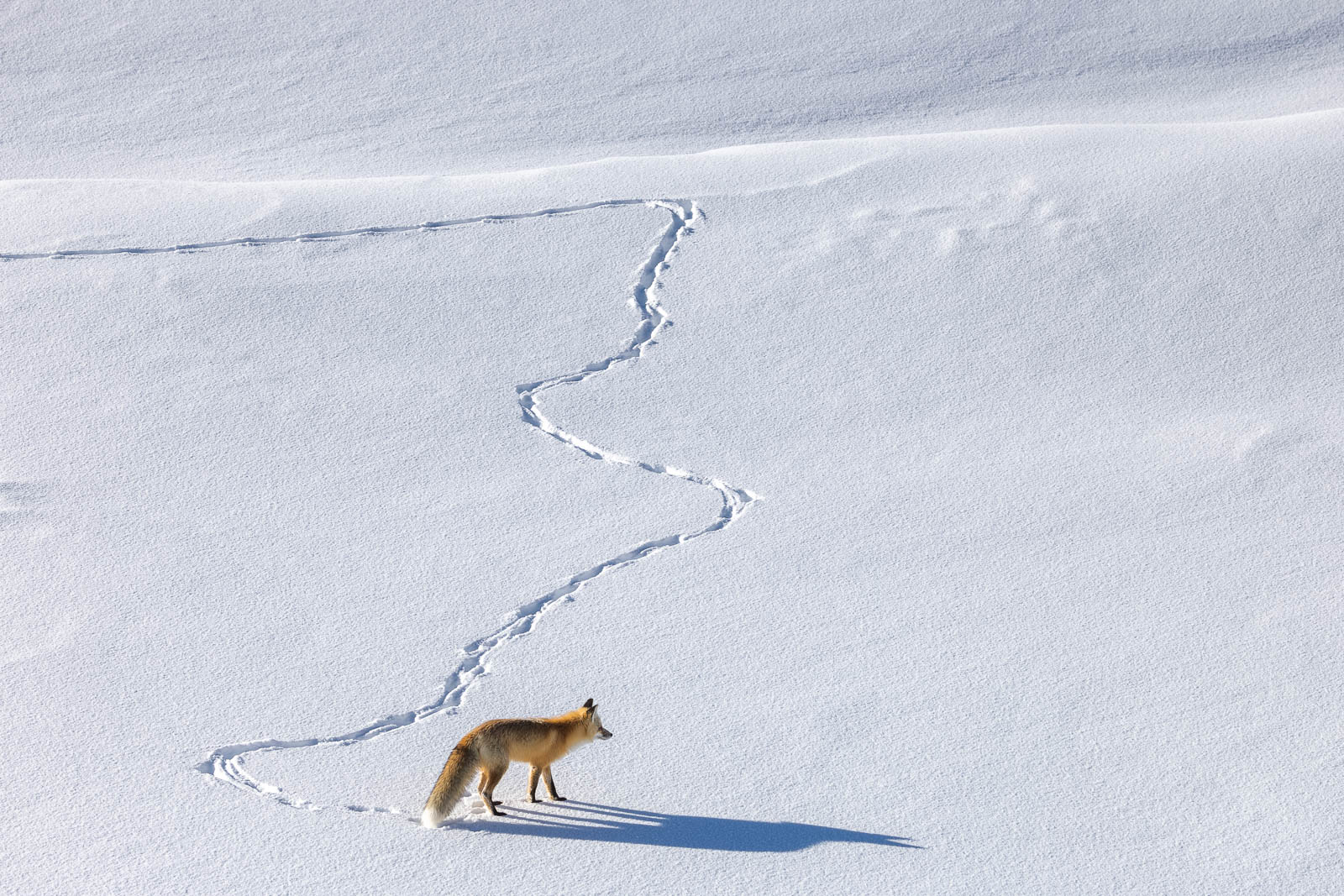
The silence in Hayden Valley during winter is something you can feel. It's a heavy, clean quiet that blankets everything. I was just scanning the landscape when I saw this flash of orange. The fox was moving with such purpose, leaving this perfect, winding signature across the snow. The sun was bright and low, casting a long, sharp shadow that seemed to stretch on forever. I didn't hear a thing, just watched it pause, listening for something I couldn't perceive beneath the surface. It was a simple scene, but it felt profound—just this one living, breathing creature making its way through an enormous, empty world.
I always enjoy watching foxes hunt in winter, the way their small paws seem to float across the snow and the graceful arc of each leap as they dive for prey.
On this day, I was drawn not only to the fox itself, but to the winding patterns he left behind and the long shadow stretching across the snow. It became a simple scene, but one that tells a quiet and elegant story of survival in winter.
Canyon Light Eddy
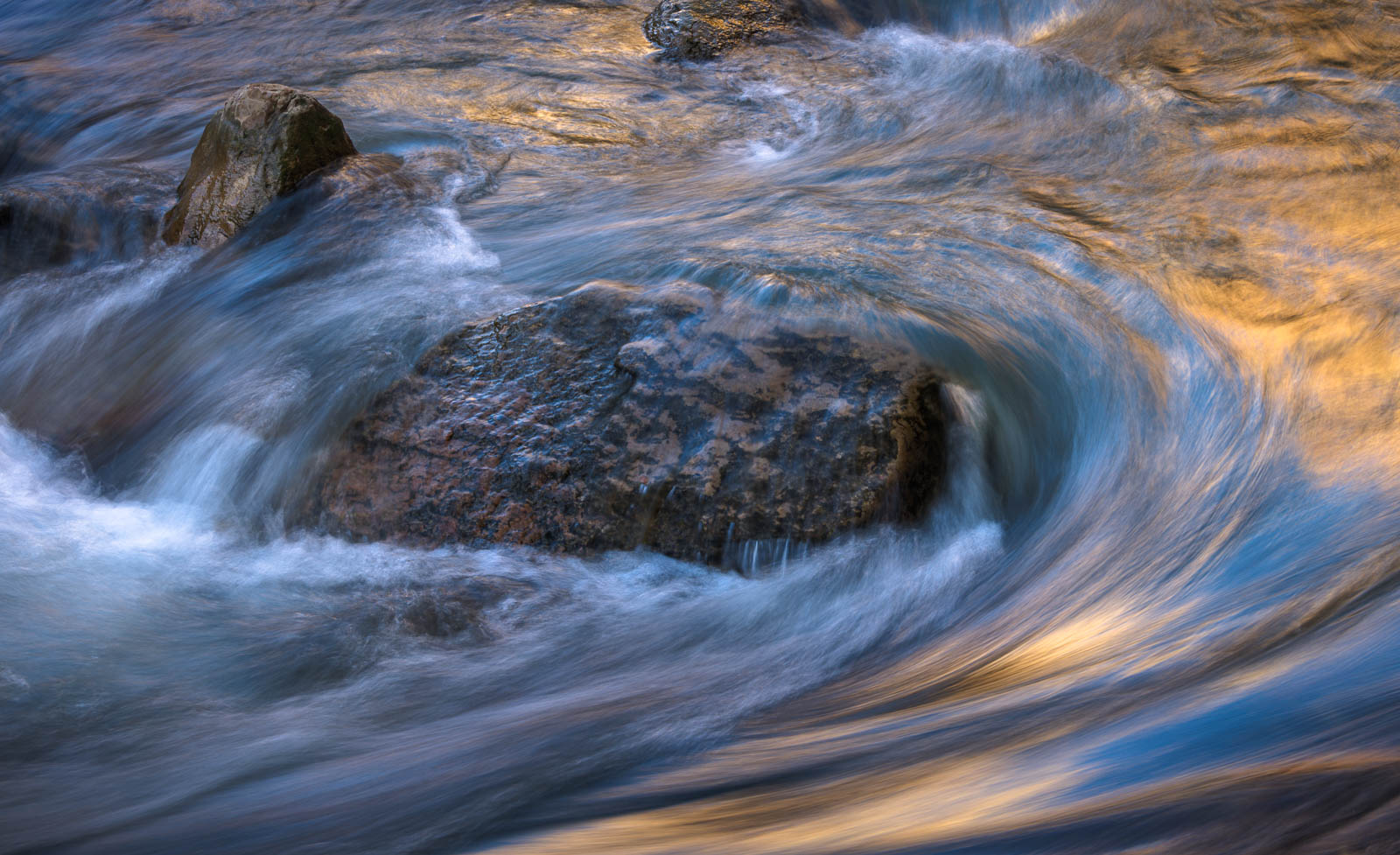
I spent the morning on the Virgin River in Zion, looking for these smaller, more intimate scenes. The grand vistas are incredible, but there's a different kind of story happening at your feet. I found this one rock holding its ground as the current split and swirled around it. The sun hadn't hit the canyon floor yet, but the light bouncing off the high sandstone walls painted the water's surface. I set up my tripod, feeling the river's pull against the legs, and used a long exposure to smooth the chaotic water into these soft, painterly strokes of blue and gold. It was a quiet, focused moment—just me, the rock, and the constant sound of the river carving its way through the canyon.
In canyon country, I’m always watching for reflected light, and this morning in Zion Canyon was no different. I wandered up and down the riverside, waiting for something to settle into place. This rock, with the way the water wrapped around it, finally caught my attention.
I slowed the shutter just enough to soften the water’s surface, creating a gentle contrast against the solid texture of the stone.
I’ll be out backpacking for the next couple of days, so I’ll share another image on Monday.
Sandstone and Gold Leaf
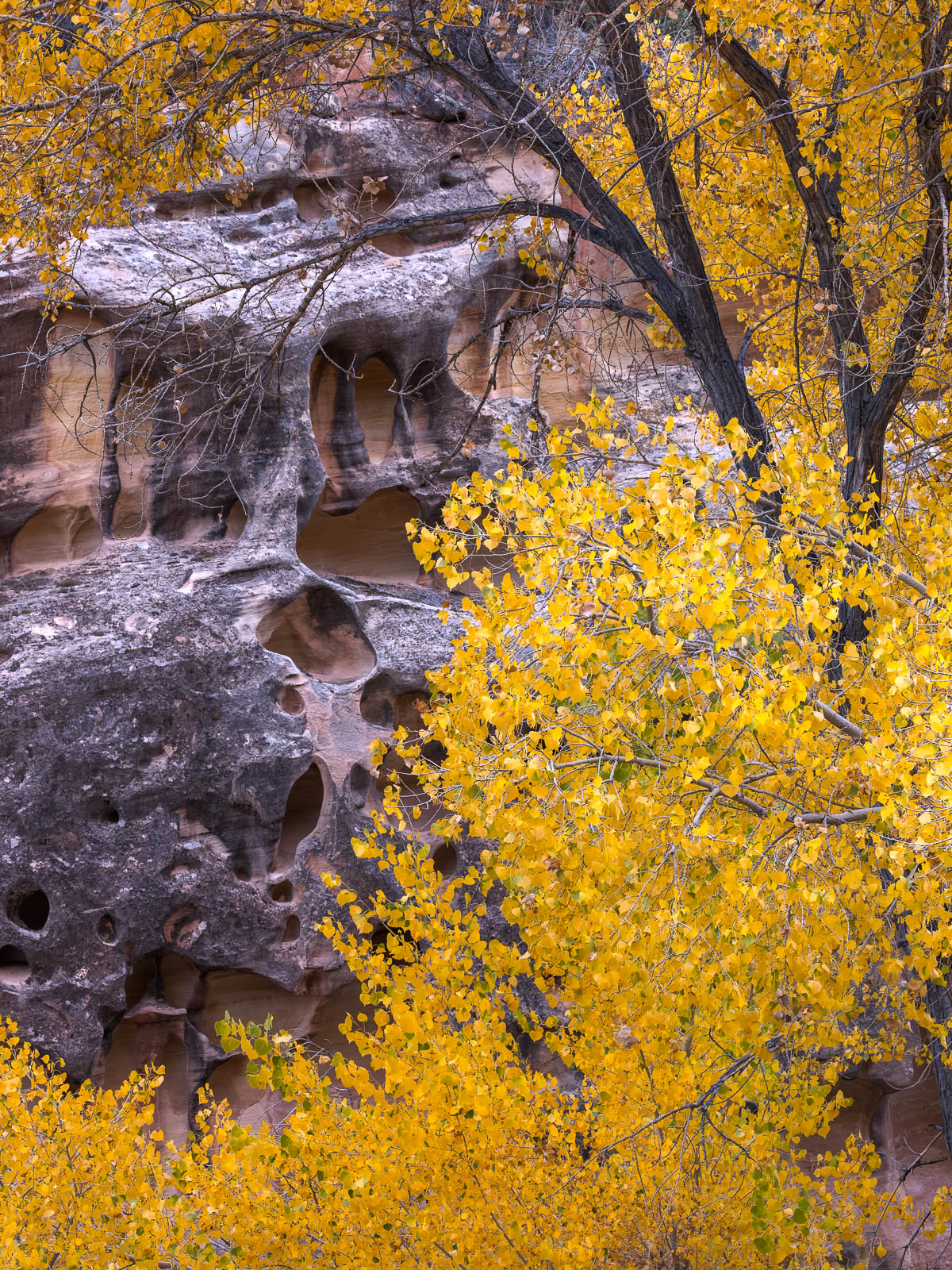
You find these little pockets of perfection in Capitol Reef if you just slow down. I was walking along the Fremont River, and the air had that cool, dry snap of autumn. The grand cliffs are always impressive, but my eye was drawn to this contrast. The cottonwood leaves were this impossible, brilliant yellow, so bright they almost seemed to hum with color. Behind them, the sandstone was dark and weathered, full of these deep pockets and hollows carved by time. It was a simple scene, but it felt profound—the vibrant, temporary life of the leaves set against rock that has stood for millennia. I just stood there for a while, listening to the leaves rustle, trying to take in the texture of it all.
Canyon country has earned a special place in my heart, and being there in the fall deepens that connection even more. There’s something about the yellow leaves set against warm sandstone that brings me a quiet sense of peace.
While autumn in the mountains is always dramatic and exciting, I’m especially drawn to the subtleties of fall in Capitol Reef. It’s softer, more understated, and perhaps that’s exactly why it resonates so deeply with me.
The Patriarch's Gaze
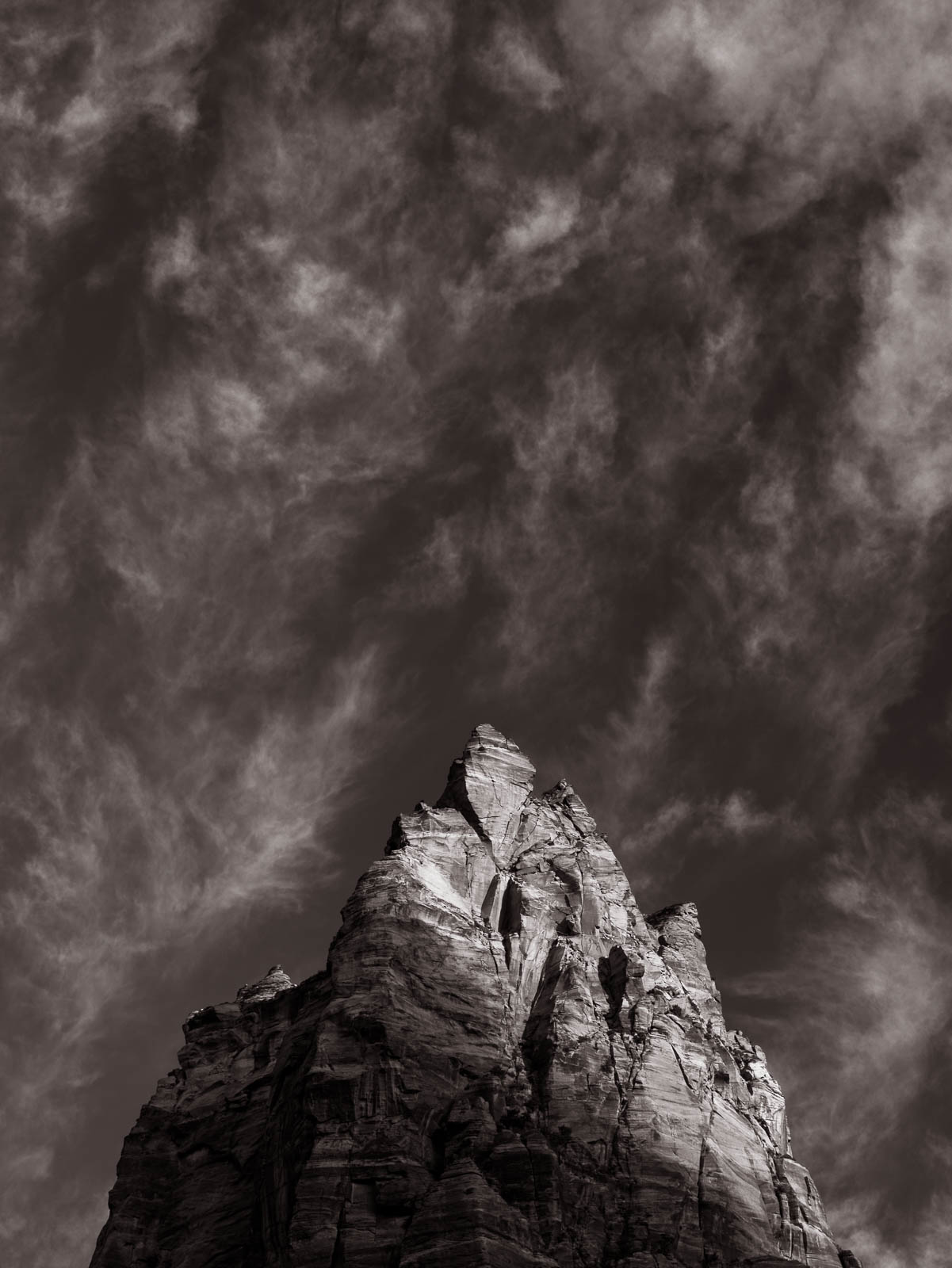
I was standing in the Court of the Patriarchs that morning, and the sky was just doing these incredible things. Most people focus on the main three, but my eye kept getting pulled toward Jacob Peak. There was a crispness to the air, that quiet you only get in the desert before the day really starts. The first light was just catching the high edges of the sandstone, making it stand out. The clouds were swirling with so much texture, almost like smoke. I knew right away this had to be a monochrome shot; color would have just been a distraction. I wanted to show the raw contrast between the solid, ancient rock and the fleeting movement of the sky.
These clouds completely captivated me that morning in the Court of the Patriarchs in Zion. As the early light began to break through, Jacob Peak caught my attention, rising into the clouds and momentarily separating itself from the rest of the scene.
It immediately felt right for monochrome. Stripping away color allowed the textures of the clouds and the sandstone to take center stage, emphasizing the weight, form, and atmosphere that drew me in to begin with.
Washburn's Reveal
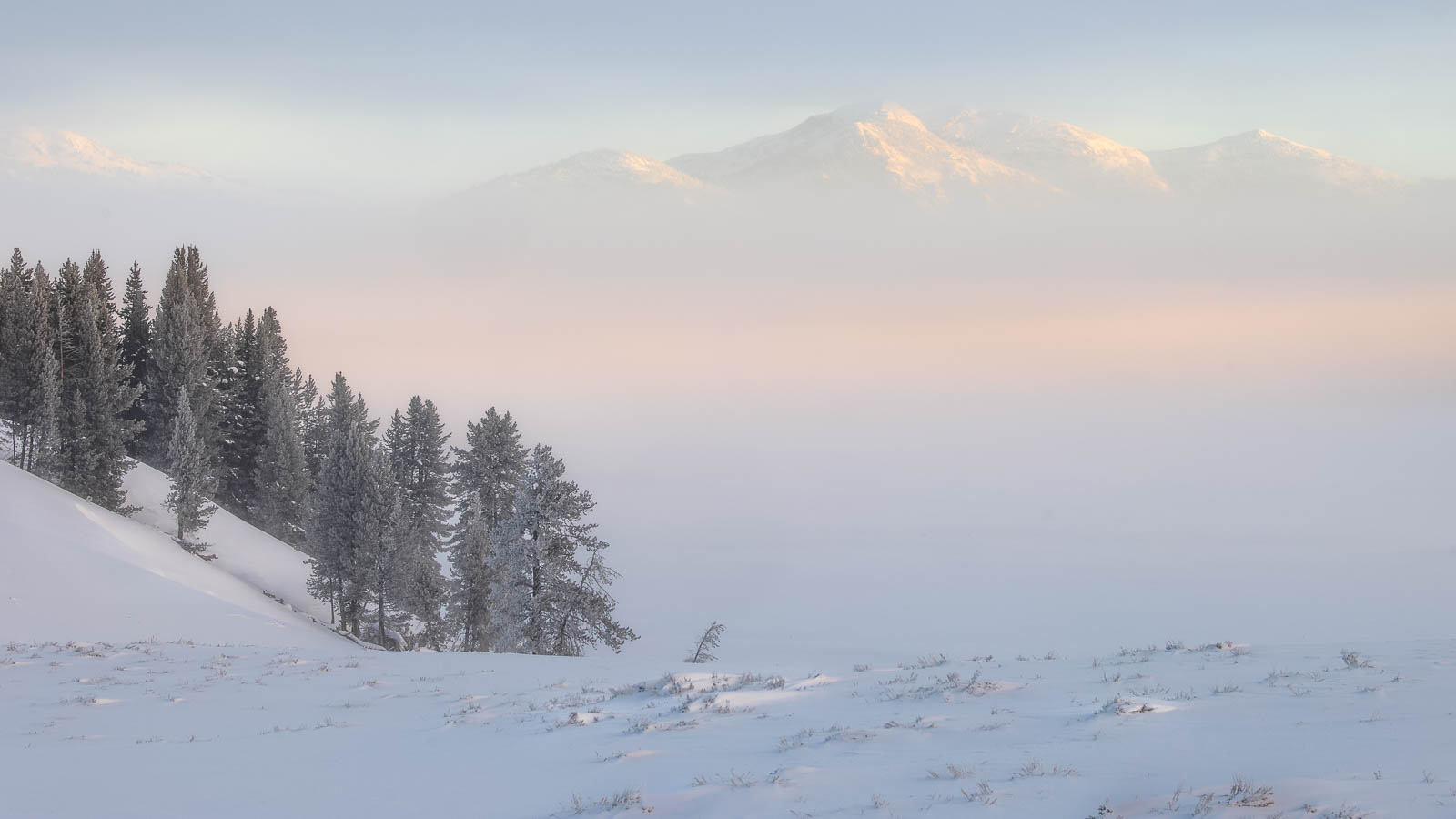
I'd been standing out in Hayden Valley for what felt like an eternity, the cold seeping into my boots. Everything was completely socked in with this thick, silent fog. You couldn't see more than a few feet, and the only sound was the soft crunch of my own shifting weight on the snow. I almost packed it in, but then, for just a couple of minutes, the fog thinned. A soft pink glow appeared, and suddenly the peaks of Mount Washburn were floating above the sea of white, catching that first direct sunlight. The air was so still. It was one of those quiet, unexpected moments that makes getting up in the freezing dark completely worth it.
Heading back to Yellowstone today, so this felt fitting. I’m always hoping for conditions like this, light breaking softly through the fog. On this particular morning, we were treated to a brief moment when Mount Washburn revealed herself in beautiful, gentle morning light.
I’ll try to keep up with my daily posting this week, but no promises. Yurt life moves at its own pace.
Elephant Skin
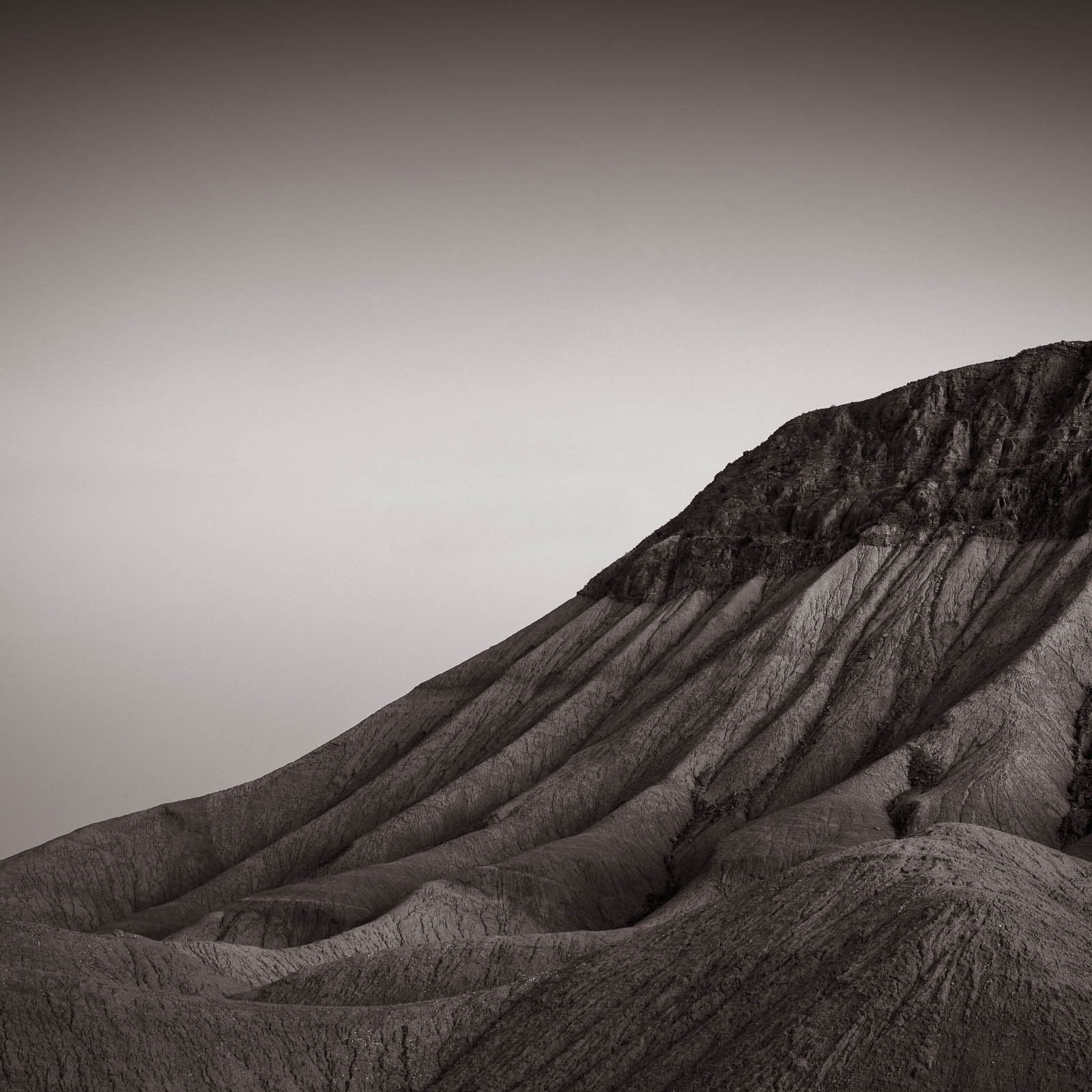
You find the strangest things out in the desert. They call these the Elephant Hills in Anza-Borrego, and I can see why. I was struck by the texture of the land, how it looked like deeply wrinkled skin, folded over on itself after countless seasons of sun and the rare, violent rain. It felt ancient. I wanted to capture just that single, powerful line the hill made against the sky, stripping away everything else. It’s a simple composition, but it holds the whole story of this place: time, erosion, and a stark kind of beauty.
This image was all about tone and texture. A simple composition that just felt right. It was made in a beautiful part of Anza-Borrego, where the hillsides are softly wrinkled and full of subtle character.
Color Before the Storm
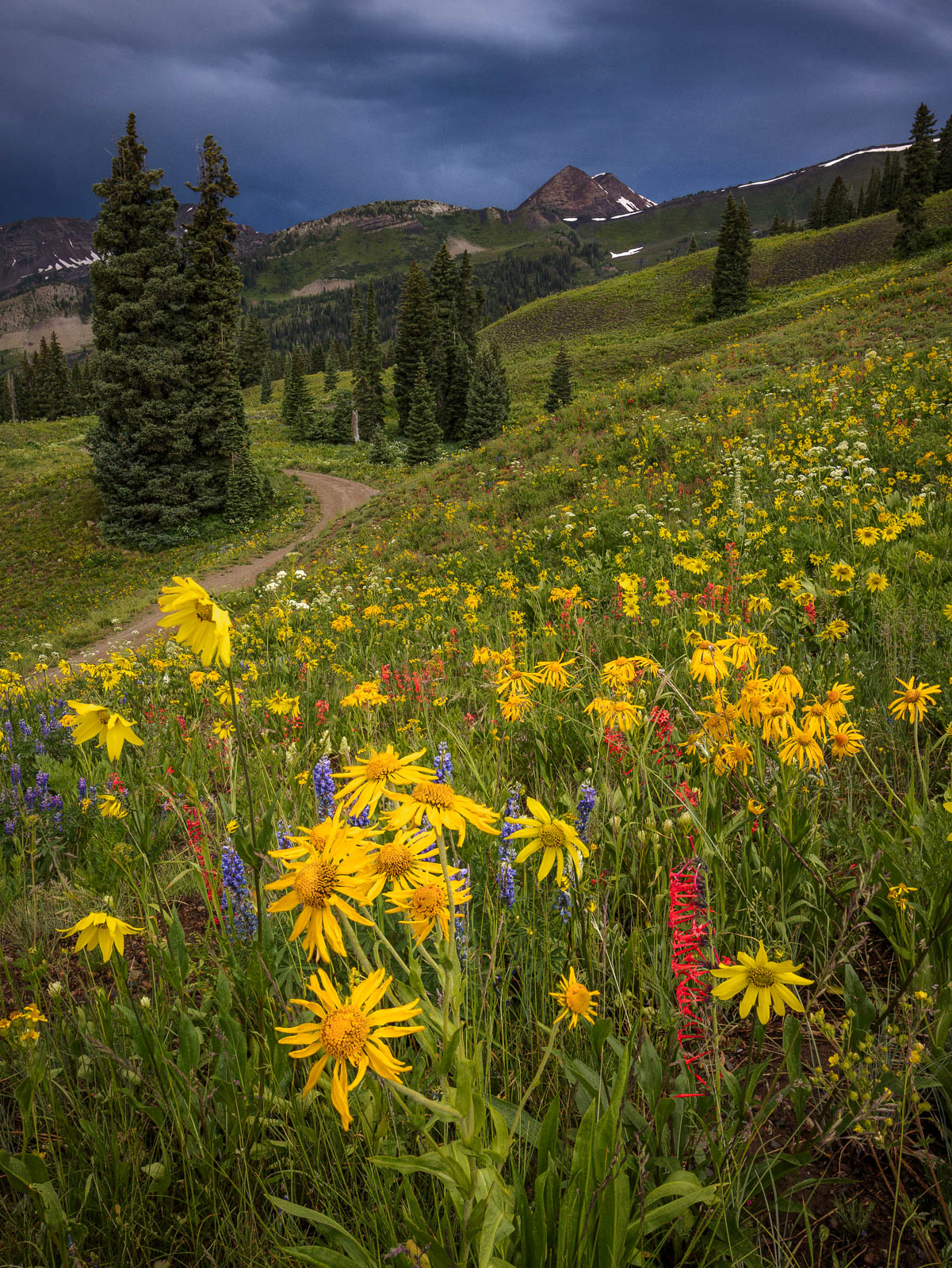
The wildflowers in the high alpine near Crested Butte were incredible this past summer. Fields of color erupted across the landscape, a truly striking sight. While these blooms were limited to a few areas, where they did appear was stunning.
We spent several days photographing within one small zone, reached by a long, bumpy 4x4 road. It was well worth the effort, as we had the place almost entirely to ourselves. Seeing wildflowers like this again felt like stepping back ten years, a quiet reminder of what these landscapes can still offer when conditions align.
The Unreached Rain
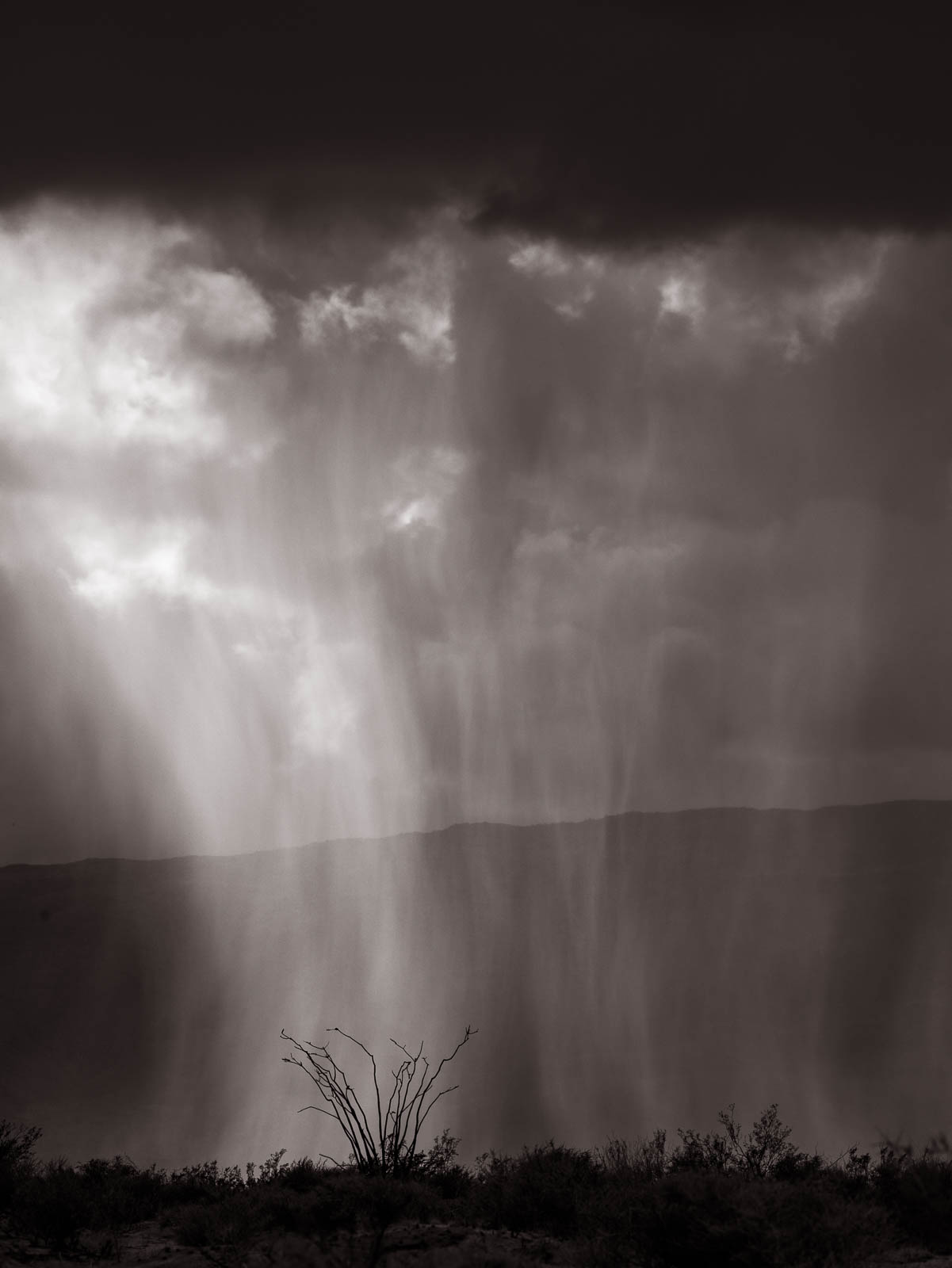
You can feel a storm coming in the desert long before it arrives. The air gets thick, the temperature drops a few degrees, and you can smell the dust and the distant rain. I was watching this cell move across Anza Borrego, mostly just a dark smudge on the horizon. Then, the sun found a gap behind it, and these incredible shafts of virga lit up. The rain wasn't even hitting the ground, just evaporating mid-air. It was a perfect natural spotlight, and right in the center was this one ocotillo, holding its ground. I only had a minute or two to get the shot before the entire scene dissolved back into the gray afternoon.
There’s nothing quite like a storm passing through the desert. The smell is what captivates me most, it’s become my favorite scent in the world. Unfortunately, that’s something you can’t photograph. But when I look at this image, I can smell it all the same.
Never mind that this is virga and likely never even reached the ground. It still fills my mind with those familiar desert scents.
Winter's Shadow
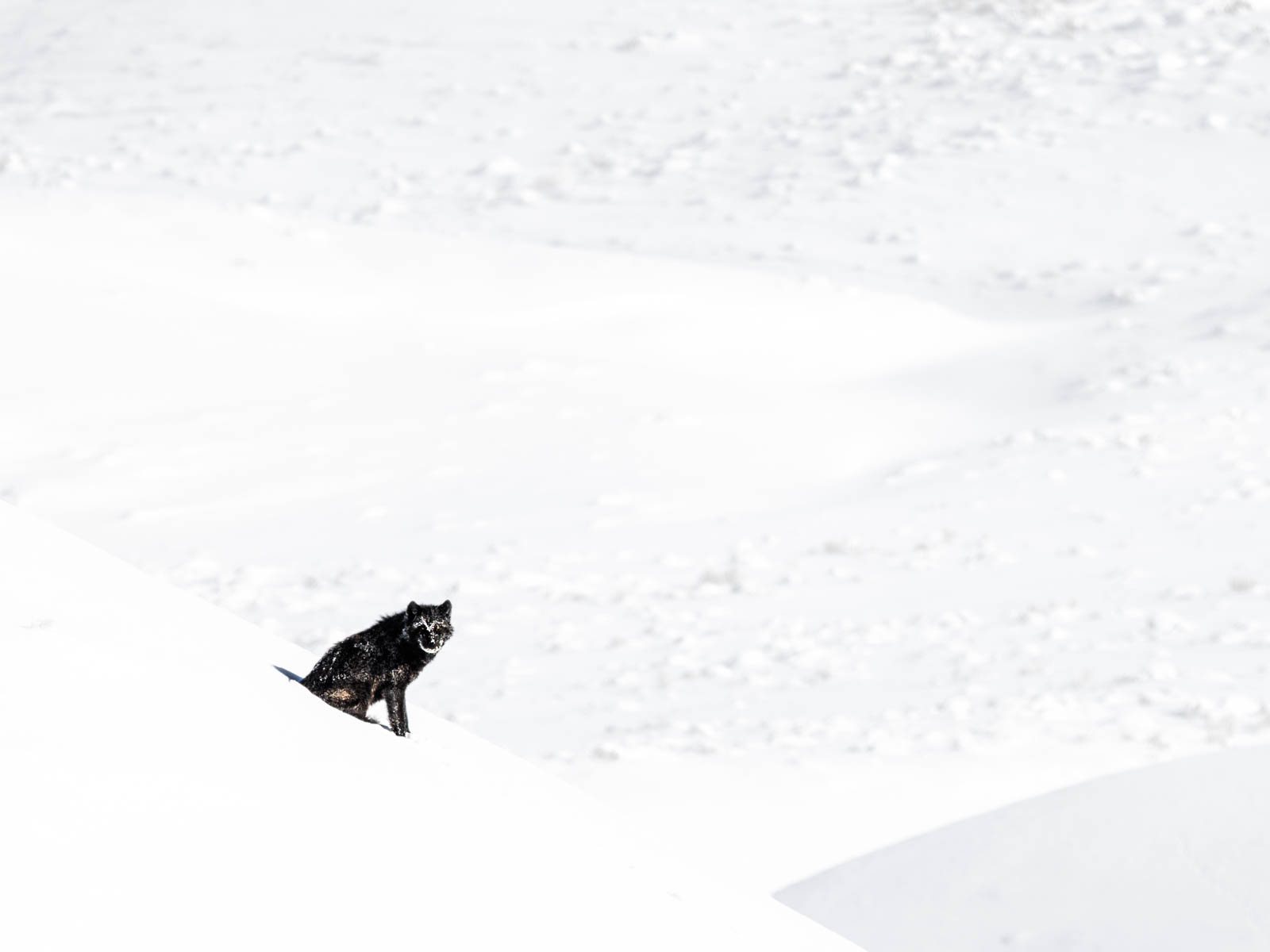
I’ve never really thought of myself as a wildlife photographer. It’s simply never been what calls to me. But there’s something about wolves in Yellowstone, especially in winter, that’s deeply captivating. I’ve found myself enjoying photographing them far more than I ever expected.
We still focus primarily on landscapes each winter, but the thrill of encountering wolves is undeniable. Looking forward to heading back again next week.
Sandstone's Golden Vein
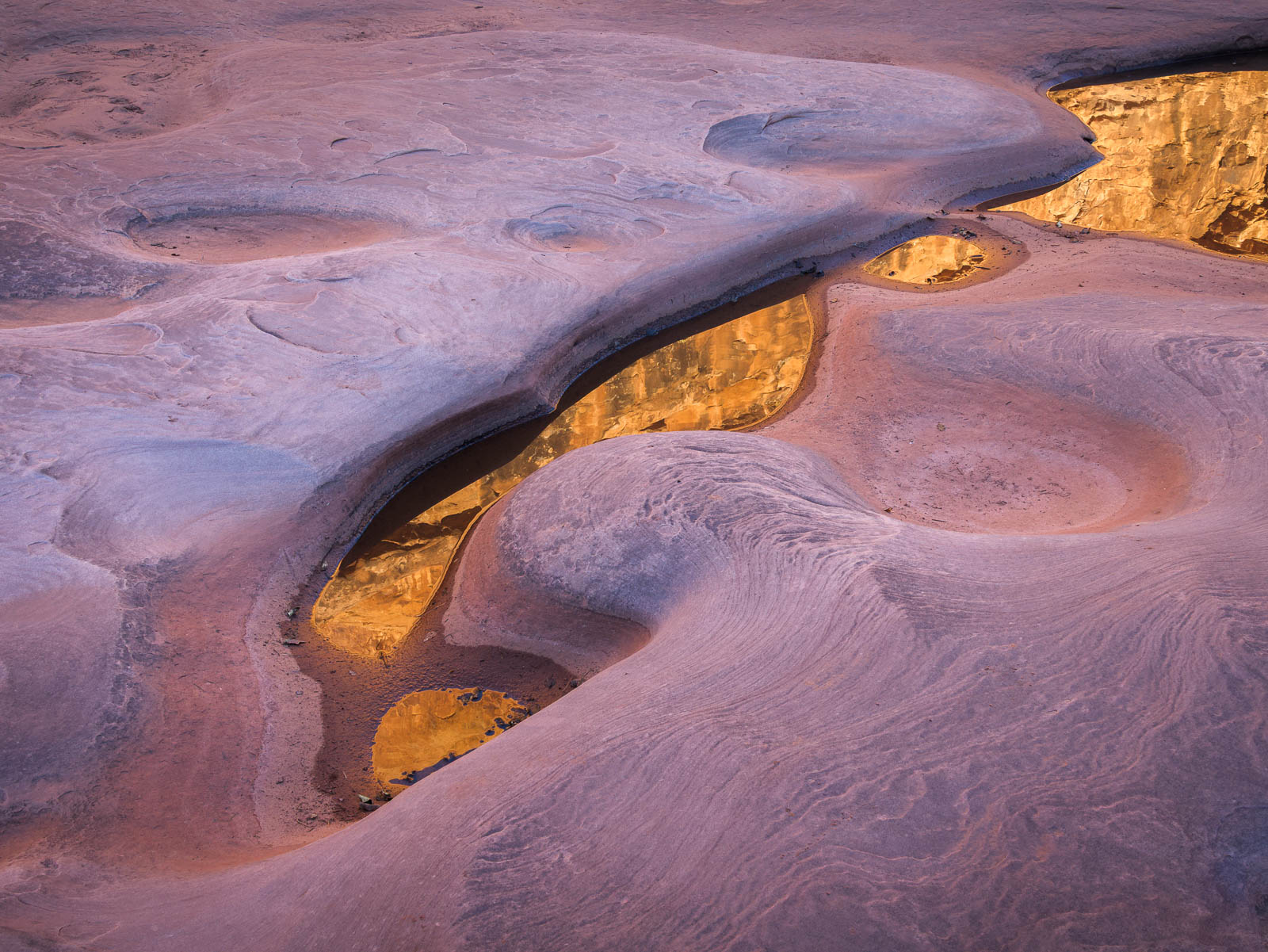
It's funny how the biggest landscapes often hide the most compelling details right at your feet. I was wandering through a canyon system near Moab after some recent rains, and I almost walked right past this. The sandstone was this incredible cool purple in the shade, but then I saw these flashes of gold. The potholes, filled with still, cold water, were perfectly positioned to catch the light hitting the opposite canyon wall. It was like the rock had split open to reveal liquid gold inside. A simple, quiet scene, but it felt like a secret.
One of our favorite ways to spend time in the desert is simply wandering through canyons, exploring and discovering new ones. We had visited this canyon before and remembered a series of beautiful potholes that I knew would come alive after a rain.
We were lucky with the timing. Recent storms had filled the potholes with water, and when we arrived, the light was reflecting off the canyon walls above while the pools below remained in shadow. It was one of those quiet moments where everything briefly aligned.
Desert Veins of Fire
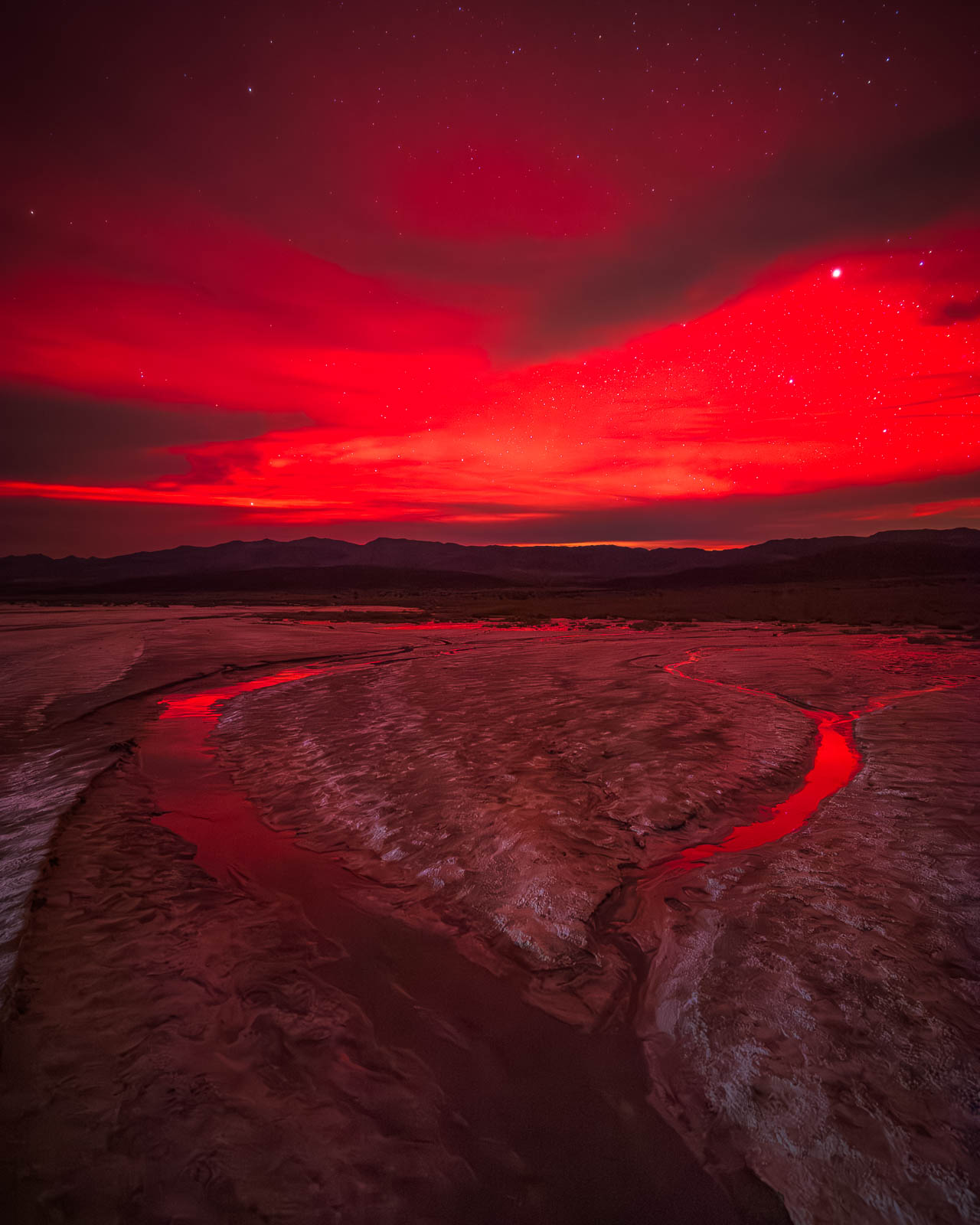
You hear stories about the aurora showing up in Death Valley, but you never really expect it. Most of the time, it's just a faint red smudge on the horizon. I've been fortunate to see it a couple of times before, but this night was different. A substorm just exploded out of nowhere. The whole sky turned this intense, unbelievable red. I looked down and the salt streams at my feet were glowing, reflecting the sky like they were filled with liquid light. It felt completely unreal, watching the desert floor bleed with the same color as the sky. It was one of those moments you know you'll never forget, a total fluke of nature that I just happened to be in the right place to see.
Jennifer and I have become a bit of aurora hunters, even in the most unlikely places. I’ve now been fortunate enough to see the Aurora Borealis in Death Valley three times, something that’s incredibly rare given how far south it sits. Seeing it there requires an unusually strong solar storm, and on this night, all the pieces came together.
As we were driving from Zion to the California coast, we realized there was a real chance and decided to make a detour through Death Valley. It turned out to be the right call. The red in the sky was remarkably intense, clearly visible to the naked eye, and what the camera captured was even more striking. I actually had to dial the reds back in processing because they were nearly overwhelming.
Knowing the park well allowed us to find a location that worked perfectly, where the auroral light could reflect in the shallow streams and across the surrounding salt flats. It was one of those nights that reminds you why staying open to possibility and taking a chance can be so rewarding.
Ephemeral Contours
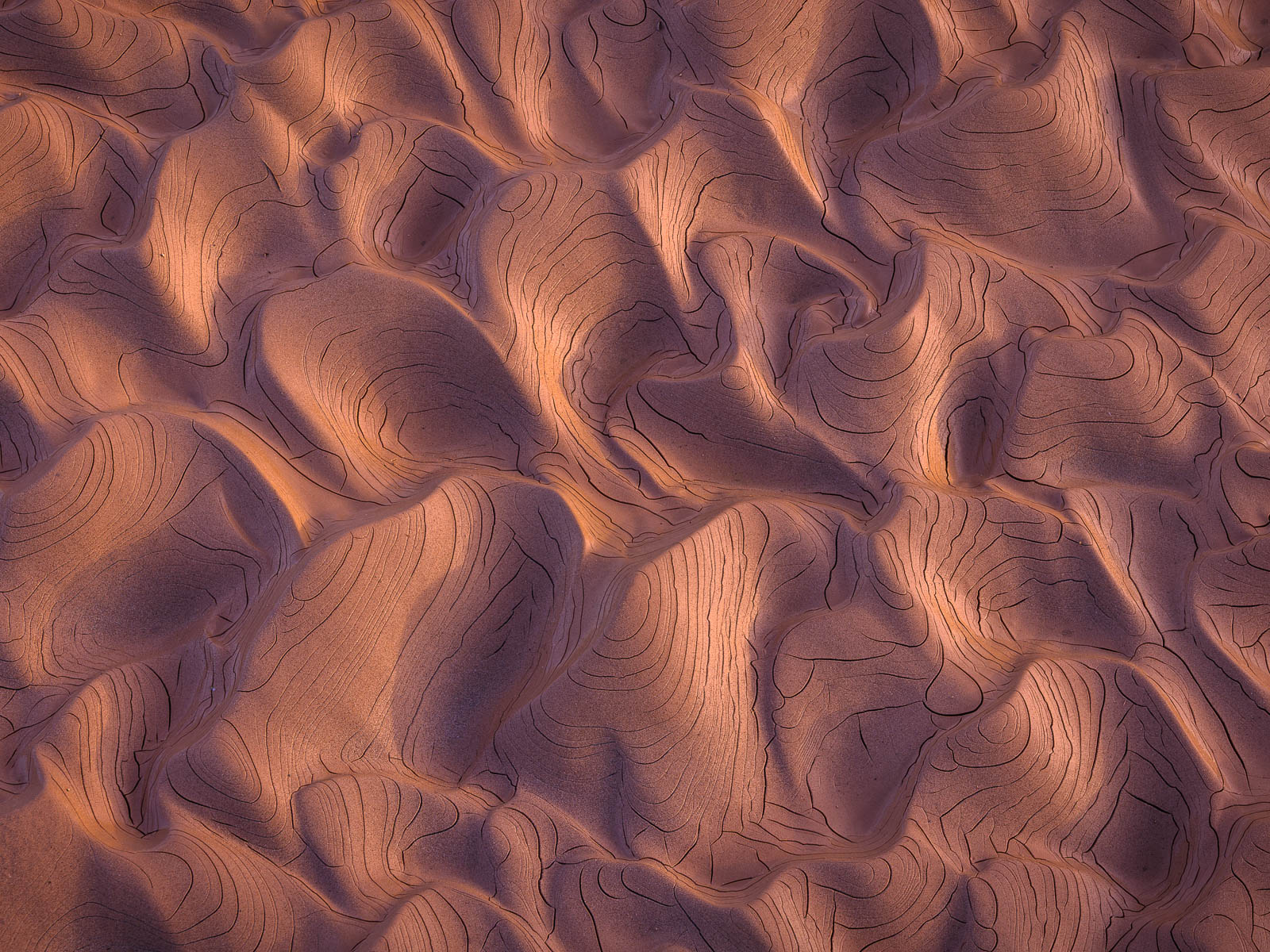
You don't expect to find evidence of so much water in Death Valley. After some rare flooding rains, we found miles of this. It was surreal. The mud had dried just enough to crack, creating these incredible lines that looked like a topographic map. It felt like I was looking at a landscape in miniature. We spent days out there, just walking and watching the light change, feeling like we'd stumbled onto a secret the desert only reveals once in a lifetime.
We’re always on the lookout for ephemeral mud. It creates patterns that are easy to get lost in. This winter in Death Valley, we were given a gold mine, miles and miles of mud like this. In certain areas, the surface had just begun to dry and pull apart, forming delicate cracks that traced the ground like contour lines on a topographic map. It’s just one of the many quiet, fascinating details the desert reveals if you take the time to look.
Echoes in Stone
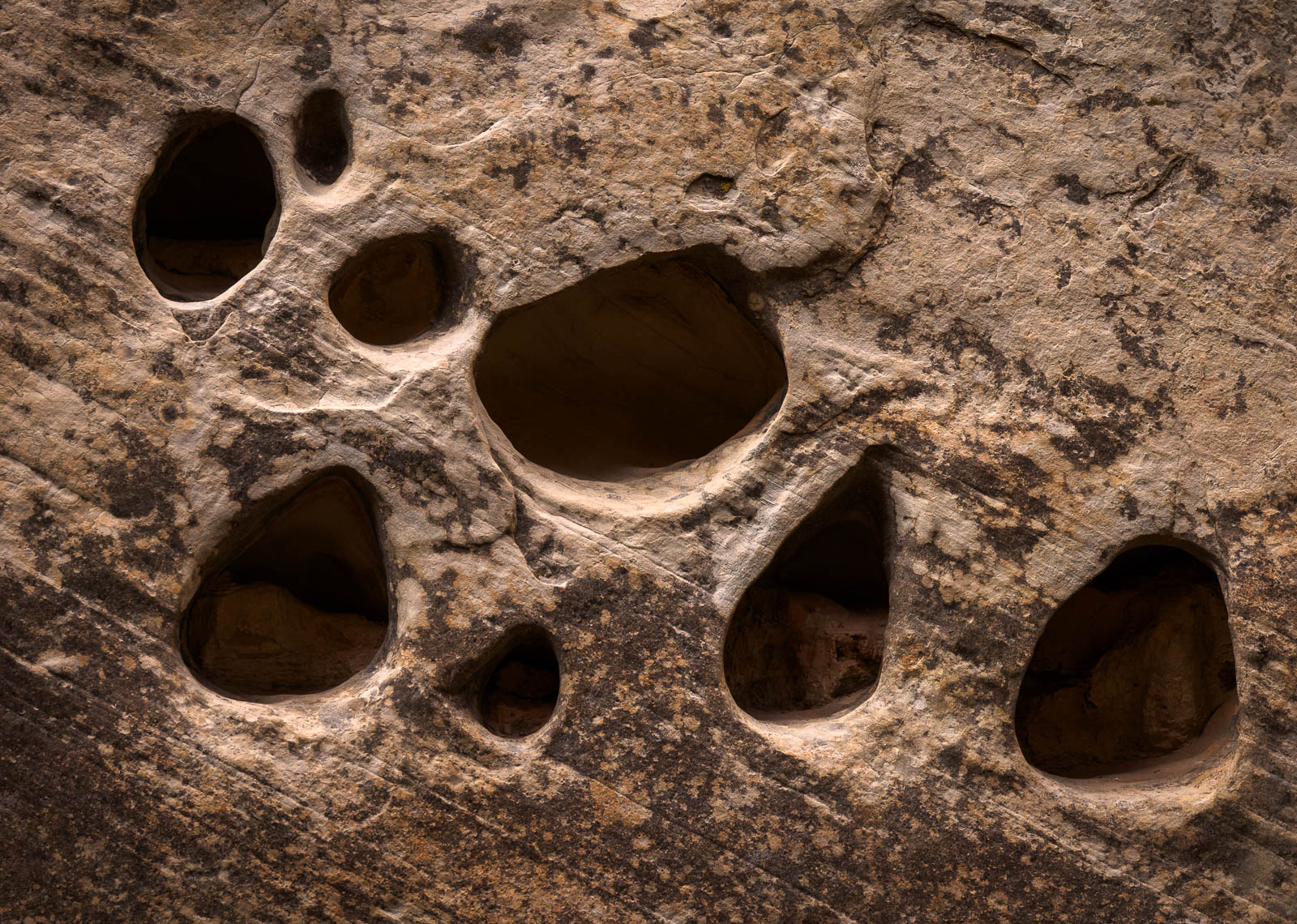
You find the most interesting things when you wander off the main path. I was exploring a narrow canyon deep in Capitol Reef, the kind of place where the only sound is your own breathing. I came across this wall of sandstone, and it just stopped me. It looked like a face staring back, weathered by countless seasons. I ran my hand over the surface; the main rock was gritty, but the inside of these potholes was surprisingly smooth. You can almost feel the memory of the water that swirled here, grinding away grain by grain for who knows how long. It’s a quiet reminder of how patient and powerful erosion is, creating these deep, dark voids in the solid rock.
I find formations like this endlessly fascinating. I can’t quite wrap my mind around how water could swirl in one place long enough to shape sandstone in this way. Presumably it would have taken a high river flowing for an extended period of time, but I’m no geologist. I’ll leave that part to Jennifer.