
Desert Tides
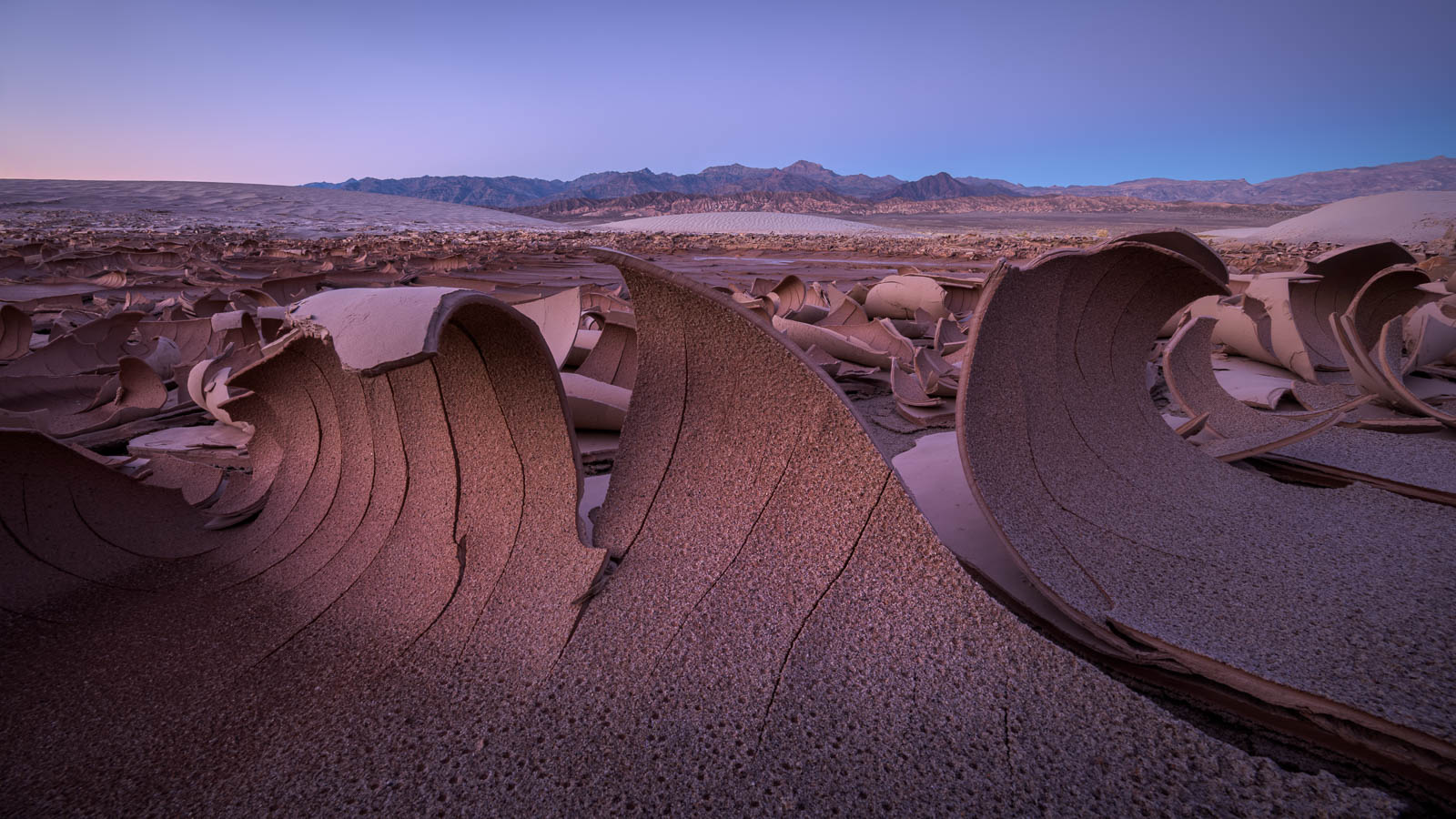
After a week of photographing the same area, you start to think you've seen all the mud cracks the desert has to offer. I was feeling a bit stuck, honestly, just seeing the same patterns from above over and over. Then I stumbled upon this section. The mud wasn't just cracked; it was peeling up, curling into these incredible shapes. The air was getting cold as the last light faded, casting this soft purple glow over everything. Getting down low, I saw how they looked just like waves, frozen in place. It was such a strange and beautiful thing to see in the middle of the driest place imaginable, the memory of water creating an echo of the ocean. It was the exact change of perspective I needed.
After the flooding rains in Death Valley, we spent a week photographing ephemeral mud while it was still wet. At first it was exciting, even exhilarating, but after a while I could feel myself burning out, photographing the same subject in similar ways over and over.
One evening I decided to shift gears. I pulled out my wide-angle lens and started looking for something different. When I came across these mud cracks peeling several inches off the ground, I wondered what would happen if I got extremely low and let perspective do the work.
Once I dropped down, it clicked. From that angle, the curling cracks felt less like mud and more like crashing waves. I was so low that a tripod wasn’t an option, so I stabilized the camera on a small pouch and relied on focus stacking to carry sharpness from front to back.
The soft twilight light wrapped gently across the surface, emphasizing the curves and texture of the mud. It felt good to step outside the familiar and create something that surprised me, a reminder of how much possibility still exists when we’re willing to look differently.